
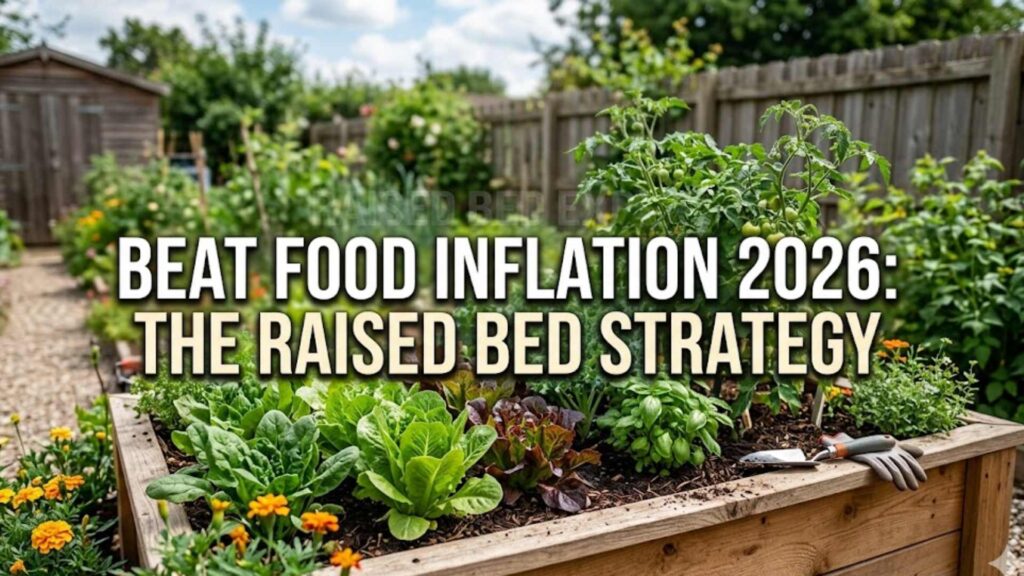
Food Inflation 2026 Is Forcing a Shift — From Buying to Producing
Food inflation in 2026 is no longer a temporary spike — it has become a structural issue affecting how Americans spend on groceries every week.
At Raised Bed Expert, we’ve seen a growing trend: people are no longer treating gardening as a hobby, but as a way to reduce long-term living costs and regain control over food quality.
When food prices keep rising, most people try to spend less.
But there is another approach — produce part of what you consume.
Growing your own food is not the cheapest option at the beginning.
It requires investment in soil, beds, and basic tools.
However, over time, it becomes one of the few strategies that can both:
- Reduce grocery expenses
- Improve food quality and health
*This video was created using NotebookLM, based on my content, so you can listen instead of reading.
The Reality: Gardening Costs More Upfront — But Less Over Time
It’s important to be clear and realistic.
Home gardening is not “free food.”
In fact, in the first season, it often costs more than buying vegetables, especially if you are starting from scratch.
A basic raised bed setup in the U.S. typically costs:
- $150 – $600 for a DIY raised bed
- Up to $1,800+ for premium or professionally installed systems
For a small garden (~100 sq ft), total first-year costs can reach:
- $400 – $2,500 depending on materials and setup quality
This includes:
- Bed structure
- Soil and compost
- Seeds or seedlings
- Basic irrigation or watering tools
So yes — initially, gardening is an investment, not a shortcut.
But Here’s the Key: Gardening Replaces Spending With Production
Unlike grocery shopping — where money leaves and never returns — gardening creates a system that produces value over time.
Research and cost models show:
- Annual maintenance cost: ~$50–$150
- Annual produce value: ~$300–$1,000 depending on yield
And importantly:
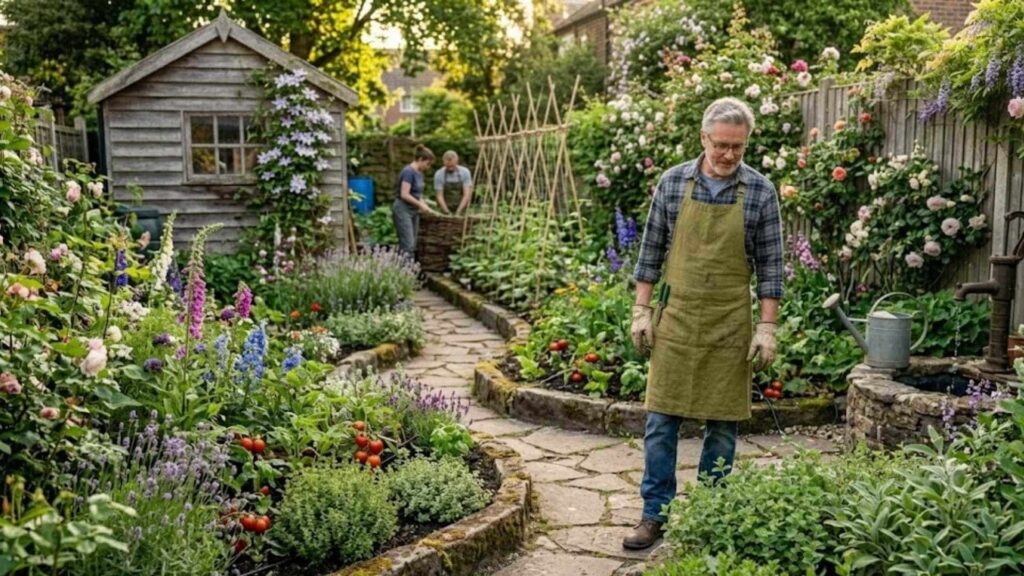
- Raised beds can produce 2–4x more food per square foot than traditional gardening
This changes the equation completely.
Instead of reacting to rising prices,
you are gradually removing part of your food budget from inflation.
Cost Comparison: Buying vs Growing Food in the U.S. (2026)
Here is a simplified, realistic comparison based on U.S. averages:
| Category | Buying Groceries (Annual) | Growing Food (Year 1) | Growing Food (Year 2+) |
|---|---|---|---|
| Initial Cost | $0 | $400 – $2,500 | $0 |
| Annual Food Cost | $3,000 – $6,000 | Reduced by 10–30% | Reduced by 20–50% |
| Ongoing Cost | Full grocery spending | $50 – $150 | $50 – $150 |
| Food Quality | Market-dependent | Controlled | Controlled |
| Price Stability | Low (inflation-driven) | Medium | High |
| Long-term Savings | None | Low (year 1) | High |
👉 Key insight:
- Year 1 = investment phase
- Year 2+ = compounding savings phase
Why Raised Bed Gardening Makes Financial Sense
If your goal is to actually save money — not just garden for fun — efficiency matters.
Raised beds are one of the most reliable ways to achieve that because they reduce failure risk.
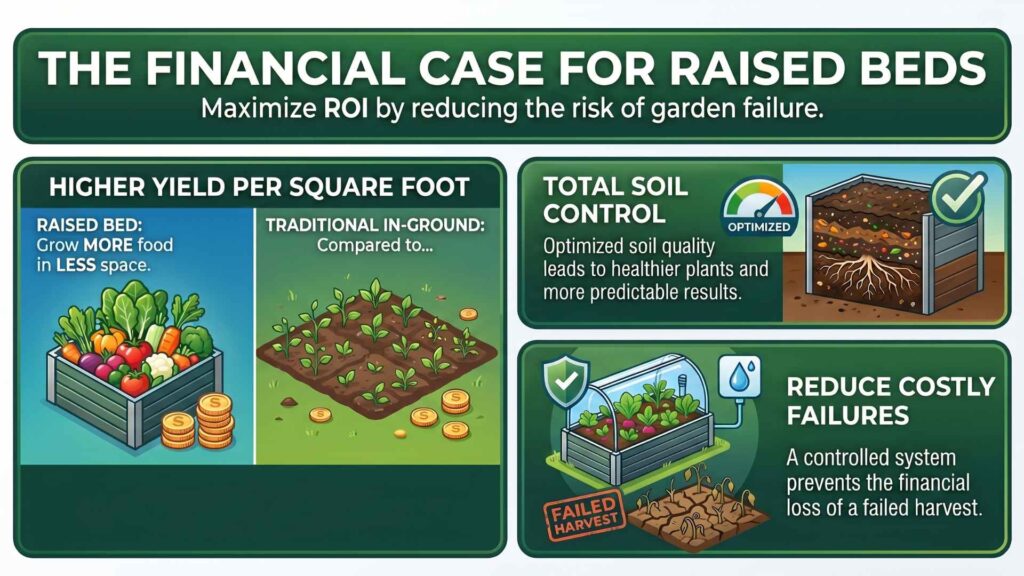
Compared to in-ground gardening:
- Higher yield per square foot
- Better soil control
- More predictable results
This matters because:
A failed garden costs money.
A controlled system generates returns.
What to Grow to Maximize Savings
Not all vegetables are worth growing financially.
The most cost-effective crops share two traits:
- Frequently purchased
- High price per unit
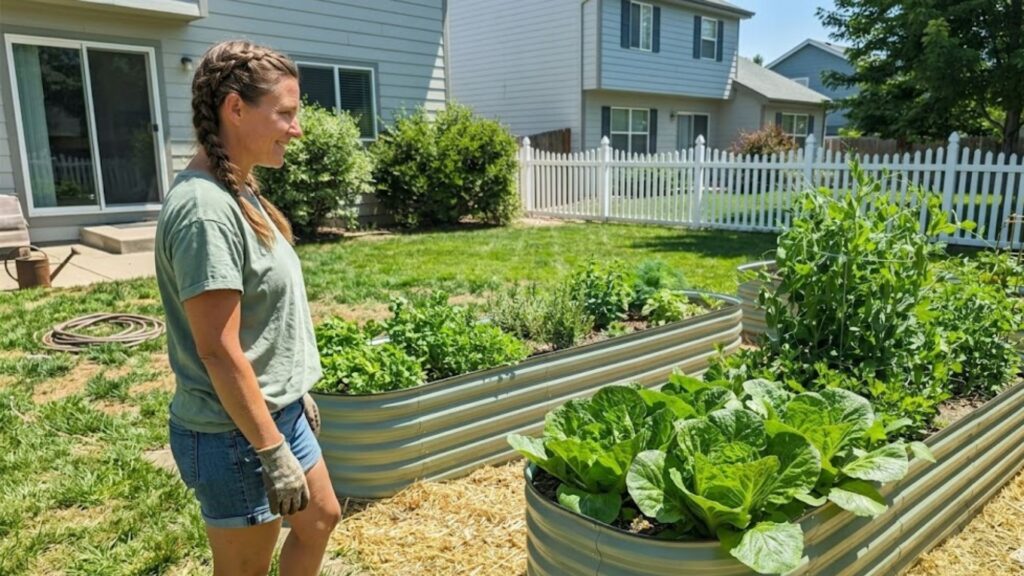
Best examples include:
- Leafy greens (continuous harvest)
- Tomatoes (high yield per plant)
- Herbs (expensive in stores, easy to grow)
- Peppers (strong price-to-weight ratio)
Studies show even a single plant (like cucumbers or tomatoes) can generate significantly more value than its seed cost
Health Benefits: The Hidden Economic Advantage
Cost is only part of the equation.
Lower grocery budgets often come with trade-offs:
- Processed food
- Lower nutrient quality
- Less transparency
Growing your own food gives you:
- Fresh, chemical-controlled produce
- Better nutrition
- Long-term health benefits
And better health ultimately reduces future costs — even if indirectly.
The Trade-Off: Investment vs Control
Let’s be clear:
- Gardening requires time and effort
- It requires upfront investment
- It is not an instant solution
But in return, you gain something most people don’t have in 2026:
👉 Control over part of your food system
And in an inflation-driven economy, that control has real financial value.
A Smarter Way to Start (Avoid Costly Mistakes)
One of the biggest risks for beginners is overspending without a clear plan.
Common mistakes include:
- Buying low-quality beds
- Using poor soil
- Starting too big
That’s why many beginners use resources like Raised Bed Expert to compare systems and avoid wasting money on setups that don’t perform long-term.
Conclusion: The Real Strategy Behind Growing Your Own Food
Food inflation in 2026 is not going away — it’s becoming part of the new economic reality.
You can continue adapting to rising prices,
or you can start reducing your dependence on them.
Growing your own food is not the cheapest option today.
But it is one of the smartest investments for tomorrow.
- It lowers your long-term costs
- It improves your health
- It gives you control in an unpredictable market
Start small. Think long-term. Because in 2026, self-sufficiency is no longer a trend —
it’s a strategy.