
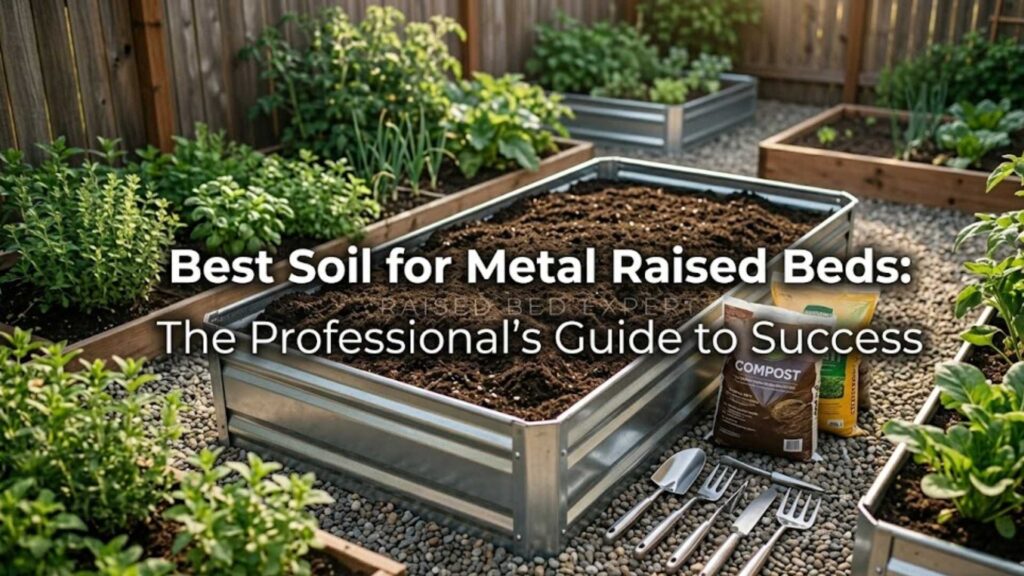
The best soil for metal raised beds is a balanced, high-porosity mixture consisting of 40% screened topsoil, 30% organic compost, 20% moisture-retaining organic matter (like coco coir or leaf mold), and 10% aeration components (such as perlite or pumice). This specific ratio ensures that the soil remains structured enough to support deep root systems while preventing the compaction and overheating often associated with the high-sided Aluzinc or galvanized steel containers used in modern backyard gardening.
At Raised Bed Expert, we specialize in transitioning gardeners from traditional in-ground plots to high-performance elevated systems. Filling a metal bed isn’t just about dumping bags of dirt; it’s about engineering a living ecosystem that thrives in a unique thermal environment.
*This video was created using NotebookLM, based on my review content, so you can listen instead of reading.
1. What Makes Metal Raised Beds Unique?
Metal raised beds—particularly those made from high-quality Aluzinc (a zinc, aluminum, and silicon alloy) or powder-coated galvanized steel—behave differently than wood or plastic.
- Thermal Mass: Metal is a conductor. While this means the soil warms up faster in the spring (extending your growing season), it also means the perimeter can become quite warm in high-summer regions like Texas or Arizona.
- Superior Drainage: Most metal beds are bottomless, allowing for excellent drainage into the native subsoil. However, because they are often 17 to 32 inches tall, they can dry out faster than shorter wooden beds if the soil mix is too sandy.
- Structural Longevity: Unlike cedar or pine, metal won’t rot or leach tannins. This means the soil you put inside can stay there for decades; you aren’t replacing the structure, just replenishing the nutrients.
- Depth Strategy: Because many modular metal beds are deep, you face a higher risk of “soil settling.” Filling the entire 30-inch depth with expensive potting mix is a common, costly mistake.
The Insight: Your soil mix needs to be a “hybrid”—heavy enough to stay moist, but light enough to stay oxygenated at the bottom of a deep container.
2. The Ideal Soil Mix for Metal Raised Beds ⭐
To achieve a high-yield harvest, you need to move away from “one-size-fits-all” bags. Here is the professional breakdown of the 40/30/20/10 formula.
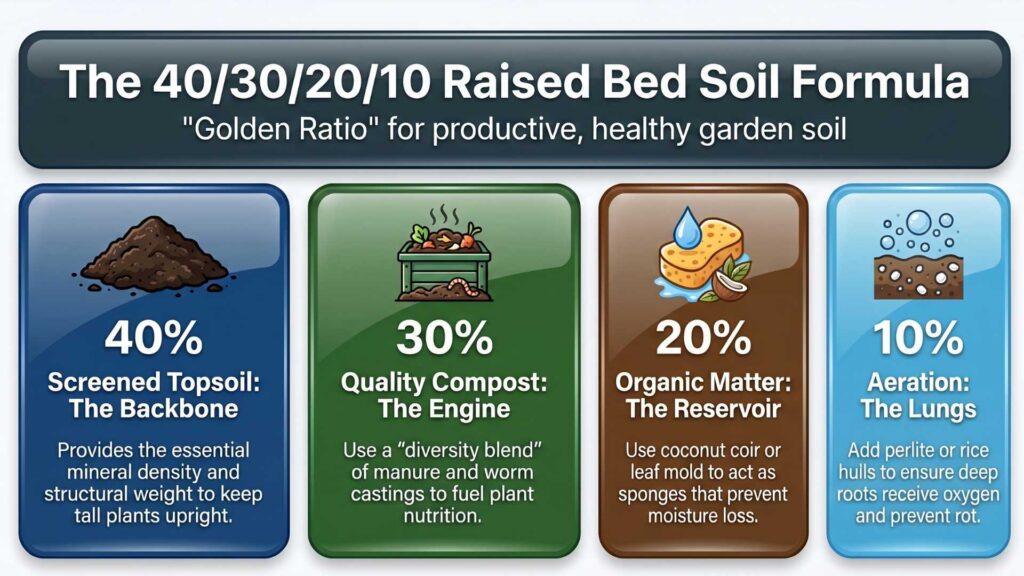
40% Screened Topsoil (The Backbone)
Topsoil provides the mineral density. It contains the sands, silts, and clays that offer structural support for your plants’ roots. Without topsoil, your mix will lack the weight to hold tall plants like corn or indeterminate tomatoes upright during a storm.
30% Quality Compost (The Engine)
Compost is where the nutrition lives. I recommend a “diversity blend.” Don’t just buy cow manure; try to find a mix of mushroom compost, worm castings, and aged herbivore manure. This introduces a broader spectrum of beneficial bacteria and fungi.
20% Organic Matter (The Reservoir)
Metal beds can lose moisture through evaporation at the surface. Ingredients like coconut coir or well-rotted leaf mold act as tiny sponges. Unlike peat moss, which can become hydrophobic (repel water) when it dries out, coco coir re-wets easily and helps maintain a consistent moisture level.
10% Aeration (The Lungs)
In a deep 32-inch metal bed, the weight of the top 10 inches can compress the bottom layers. Adding perlite, pumice, or rice hulls ensures that even the lowest roots have access to oxygen. This is critical for preventing anaerobic conditions (root rot).
3. Best Soil Layers for Deep Metal Beds (Hugelkultur Method)
If your metal bed is deeper than 15 inches, filling it entirely with the mix above is unnecessary and expensive. Instead, we use the Hugelkultur method to create a nutrient-rich foundation.
The Bottom Layer: The “Bio-Filter” (40% of depth)
Fill the bottom with bulky, slow-decaying carbon.
- What to use: Untreated logs, thick branches, and hardwood scraps.
- Why: These items take 5–10 years to decompose. They act as a moisture reservoir and provide a home for beneficial mycorrhizal fungi.
The Middle Layer: The “Accelerator” (20% of depth)
This layer bridges the gap between the logs and your planting soil.
- What to use: Inverted sod (grass side down), dry leaves, straw, or unfinished compost.
- Why: It fills the large air pockets between the logs, preventing your expensive topsoil from sifting down and “disappearing” after the first rain.
The Top Layer: The “Growth Zone” (Final 12–15 inches)
This is where your 40/30/20/10 mix goes.
- Why: Most vegetables only have a root zone of 8 to 12 inches. By reserving your best soil for the top, you save money without sacrificing yield.
4. What Soil to Avoid ❌
I have seen countless “beginner mistakes” that lead to stunted plants and frustrated gardeners. Avoid these four materials in your metal beds:
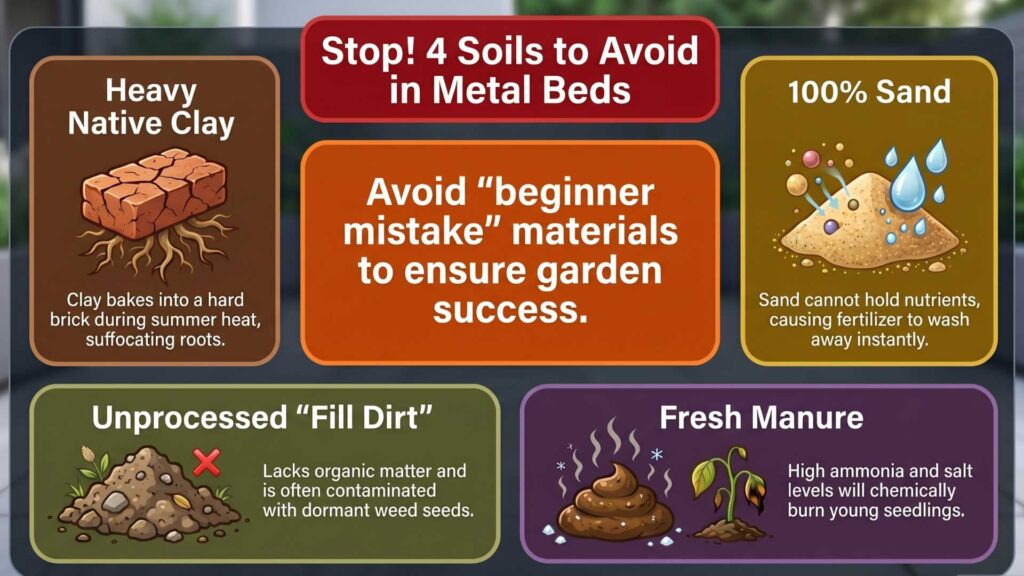
- Heavy Native Clay: If you dig up your backyard and it’s pure clay, keep it out of the metal bed. It will bake into a hard brick in the summer heat.
- 100% Sand: While great for drainage, sand has almost zero Cation Exchange Capacity (CEC), meaning it can’t hold onto nutrients. Your fertilizer will just wash away.
- Unprocessed “Fill Dirt”: This is often just subsoil from construction sites. It lacks organic matter and is frequently contaminated with dormant weed seeds.
- Fresh Manure: High ammonia and salt levels in “hot” manure will chemically burn your seedlings. Always ensure manure is aged for at least six months.
5. How Metal Beds Affect Soil Temperature
There is a scientific myth that metal beds “cook” plants. In reality, soil is a fantastic insulator.
- Spring Advantage: The metal sides absorb the low-angle sun, warming the soil 2–3 weeks earlier than the surrounding ground. This is a massive pro for gardeners in USDA zones 3–6.
- Summer Protection: In extreme heat, only the outer 1–2 inches of soil against the metal wall see a significant temperature spike. The core of the bed remains cool.
- The Solution: To manage summer heat, mulch is mandatory. A 2-inch layer of straw or wood chips on the soil surface prevents the sun from baking the moisture out of your mix.
6. Budget-Friendly Soil Options 💰
You don’t need to be wealthy to have a world-class garden. Here is how I fill my beds on a budget:
- The “Bulk” Secret: Call your local landscape supply yard. Ordering 3 cubic yards of “Premium Raised Bed Mix” delivered by a dump truck is usually 50% cheaper than buying the equivalent in plastic bags.
- Free “Fillers”: Go to your local park or neighbor during the fall. Bagged leaves are “brown gold.” Layer them deep in the bottom of your metal beds.
- The Sifted Native Soil Hack: If your native soil is decent, mix it 50/50 with store-bought compost. It adds mineral complexity for free.
7. Best Ready-Made Soil Brands
If you don’t have the space to mix your own, here are my top professional recommendations available in the US:
- FoxFarm Ocean Forest: The “Gold Standard” for nutrient density. It contains fish meal and crab meal. Best for heavy feeders like tomatoes.
- Espoma Organic Raised Bed Mix: Uses alfalfa meal and kelp meal. It’s very consistent and has great water retention.
- Miracle-Gro Performance Organics: The most widely available. It’s a solid “base” soil, but I usually recommend adding 20% extra perlite for metal beds.
8. How to Fill a Metal Raised Bed (Step-by-Step)
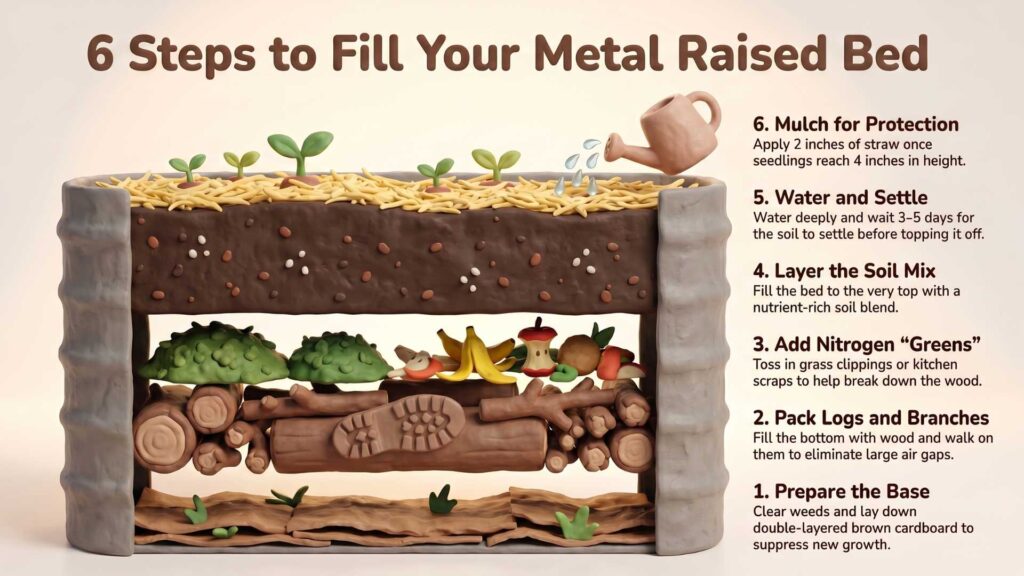
- Prepare the Base: Clear the grass or weeds. Lay down a double layer of plain brown cardboard to suppress future growth.
- Add Logs/Branches: Pack them tightly. Walk on them to collapse large air gaps.
- Add “Greens”: Throw in some grass clippings or kitchen scraps to act as a nitrogen starter for the wood.
- Layer the Soil: Add your 40/30/20/10 mix. Fill it to the very top.
- Water Deeply: Let the bed sit for 3–5 days. The water will help the soil settle. You will likely need to add a bit more soil after this “settling” period.
- Mulch: Apply 2 inches of straw once your seedlings are 4 inches tall.
9. Common Mistakes to Avoid
- Wasting Money on “Fill”: Never fill a 32-inch bed with $400 worth of bagged soil. Use the Hugelkultur method.
- Ignoring the Settle: Soil settles. If you fill it to the brim, it will be 4 inches low by mid-summer. Start high.
- No Compost Refresh: People think filling the bed is a one-time job. Every spring, you must add 1–2 inches of fresh compost to replace the nutrients your plants used.
Tina’s Perspective: Experience Over Theory
I’ve gardened in galvanized beds for a decade. My biggest piece of advice? Don’t over-engineer it. I once spent two weeks trying to get a perfect pH balance before planting. The reality is that if you use 30% high-quality compost, the microbes will regulate the pH for you.
Nature is resilient. My most successful metal beds were the ones where I simply focused on drainage and didn’t let the soil surface get “naked” (unmulched). Use the layering method to save your back and your wallet.
Final Thought
- Best for: Backyard vegetable gardeners, people with physical limitations (tall metal beds save your back), and those in cold climates.
Not for: People moving every 12 months (metal beds are hard to move once filled) or those planting xeriscape/desert plants that need high-sand, low-organic soil.
Pingback: Drip Irrigation for Raised Beds: Read This First