
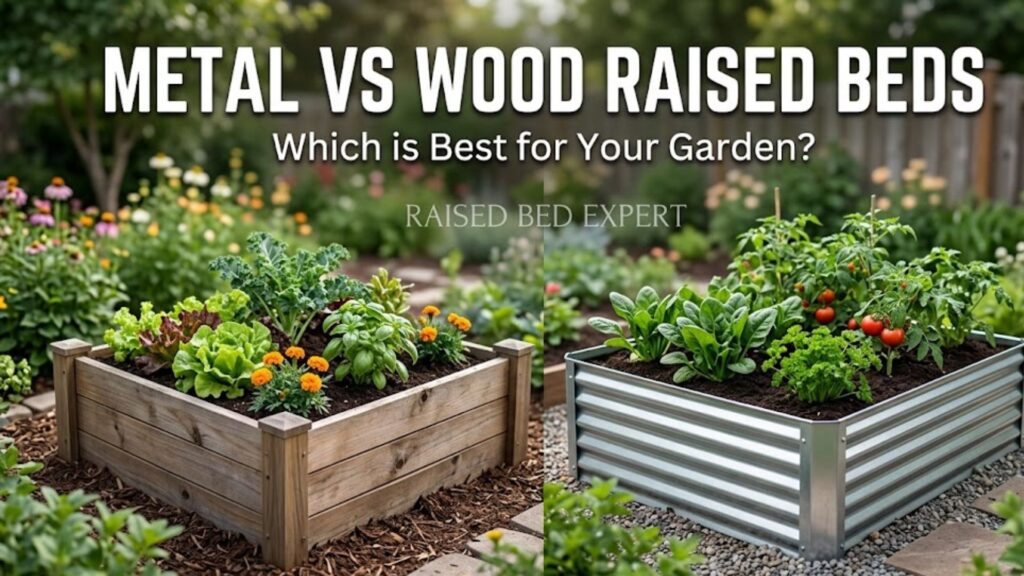
Metal vs. wood raised beds are primarily distinguished by their lifespan and maintenance requirements, with high-quality metal beds lasting up to four times longer than most wood varieties in high-moisture environments. While wood offers a classic aesthetic and lower initial cost, metal provides superior structural integrity and resistance to rot, pests, and shifting soil pressures over several decades.
The Short Answer
Wood beds are the most affordable entry point for DIY enthusiasts, while metal beds are the longest-lasting solution for permanent installations. However, the truth few people discuss is that the “cheaper” wood option often becomes more expensive over a ten-year cycle due to replacement costs. As a Raised Bed Expert, I’ve observed that gardeners who prioritize soil health and labor efficiency are increasingly moving toward modern metal alloys.
Wood vs. Metal Comparison Chart
* This video was created using NotebookLM, based on my review content, so you can listen instead of reading.
| Feature | Wood (Cedar/Redwood) | Metal (Aluzinc/Galvanized) |
|---|---|---|
| Average Lifespan | 5–12 years (Climate dependent) | 20–30+ years |
| Material Safety | Potential leaching if treated | Food-grade coatings (Aluzinc) |
| Maintenance | High (Staining/Replacing) | Zero |
| Assembly Time | 2–4 Hours (Cutting/Drilling) | 20–40 Minutes (Bolt-together) |
| Thermal Mass | High Insulation | High Reflectivity/Conductivity |
| Cost over 20 years | High (Requires 2–3 replacements) | Low (Single investment) |
The Wood Raised Bed Deep Dive: The Organic Traditionalist
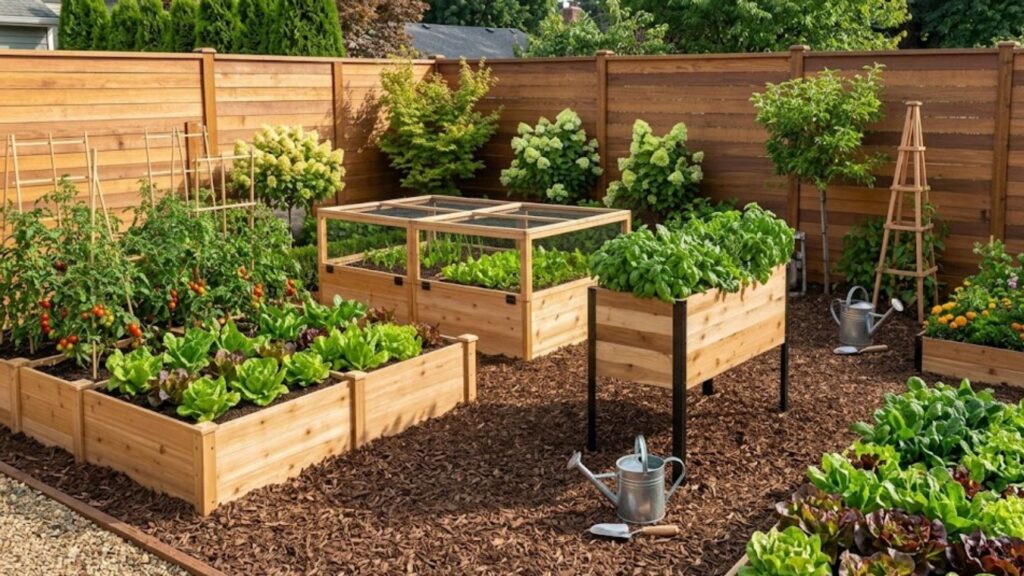
Wood has been the standard for raised beds for centuries. It is accessible, familiar, and provides a warm, organic look that many gardeners find essential to their backyard sanctuary. However, not all wood is created equal.
The Science of Wood Decay
Wood is a biological material. When placed in contact with moist soil, fungi and bacteria begin the process of decomposition. This is inevitable. Even “rot-resistant” woods like Western Red Cedar or Redwood contain natural oils (thujaplicins) that eventually dissipate, allowing the wood to soften and bow.
Pros of Wood
- Customization: If you have an odd-shaped corner or want a specific height, wood is the easiest material to manipulate with standard power tools.
- Thermal Insulation: Wood is a poor conductor of heat. This means it acts as a buffer, keeping soil slightly warmer in early spring and cooler in the peak of summer compared to thinner materials.
- Aesthetic Integration: It blends seamlessly into wooded lots, homesteads, and traditional landscapes.
Cons of Wood
- Vector for Pests: Older, softening wood is a magnet for termites, carpenter ants, and sowbugs.
- Structural Failure: Over time, the weight of wet soil (which can reach hundreds of pounds) will cause wood to bow outward if not heavily reinforced with 4×4 corner posts.
- Chemical Concerns: To make wood last, many turn to “pressure-treated” lumber. While modern ACQ (Alkaline Copper Quaternary) is safer than the old arsenic-based CCA, many organic gardeners still hesitate to put food crops in direct contact with treated fibers.
Ideal For: DIYers with a carpentry background, gardeners in very arid climates (where rot is slow), and those testing a garden location before committing to a permanent setup.
The Metal Raised Bed Deep Dive: The Industrial Evolution
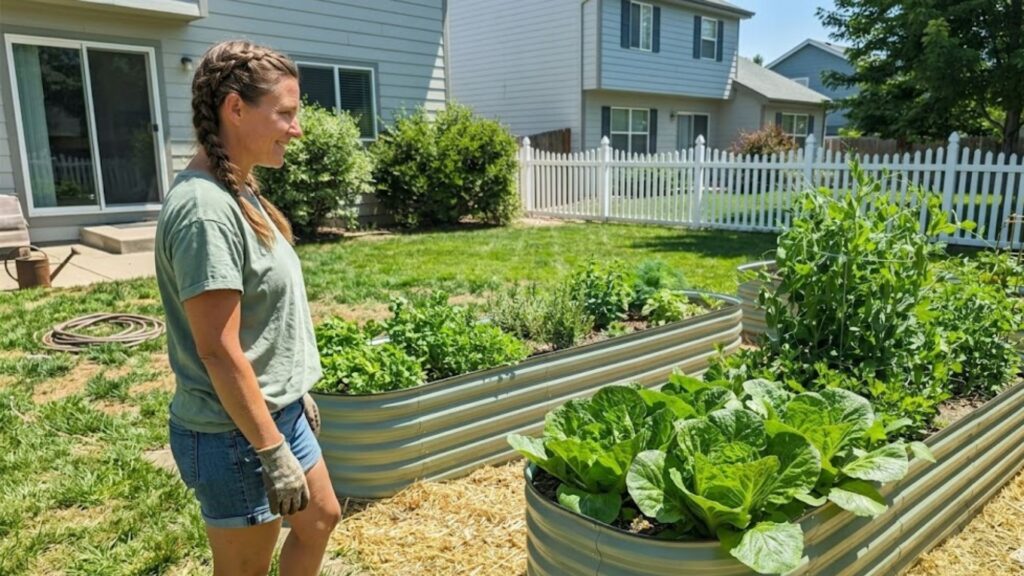
Modern metal beds are not the corrugated tin sheets of the past. Today’s market is dominated by Aluzinc (a combination of Aluminum, Zinc, and Silicon) and specialized galvanized steels designed specifically for agriculture.
Engineering for Longevity
Unlike wood, metal does not provide a food source for fungi. The primary enemy of metal is oxidation (rust). Modern Aluzinc coatings are self-healing; if the surface is scratched, the zinc sacrifices itself to protect the underlying steel. This technology allows these beds to withstand acidic soil and constant moisture for 20 to 30 years without structural degradation.
Pros of Metal
- Unmatched Durability: You will likely never need to replace these beds in your lifetime.
- Safety: Modern food-grade metal coatings are incredibly stable. There is no leaching of harmful chemicals into the soil, and the materials are 100% recyclable.
- Ergonomics: Many metal kits are available in “tall” versions (32 inches or more), allowing for gardening without bending over—an essential feature for aging gardeners.
Cons of Metal
- Upfront Investment: The price of a high-quality metal kit is often 50% to 100% higher than a basic wood bed.
- Fixed Dimensions: You are generally limited to the shapes provided by the manufacturer (though modularity is improving).
- Edge Temperature: While the soil stays cool, the top metal lip can become hot in the sun, sometimes requiring a rubber trim for comfort.
Ideal For: Long-term homeowners, urban gardeners seeking a modern look, and those in humid or termite-prone regions where wood fails quickly.
Technical Analysis: Choosing Based on Key Factors
To make an informed decision, we must analyze these materials through five critical lenses: Sustainability, Soil Health, Climate Impact, Assembly Labor, and Financial ROI.
1. The Sustainability Argument
Wood is often touted as more “eco-friendly” because it is a renewable resource. However, if you are replacing a cedar bed every 7 years, you are consuming significant amounts of lumber over a lifetime. Metal beds, while energy-intensive to produce, represent a “circular” product. At the end of their 30-year life, they can be melted down and recycled indefinitely. From a waste-reduction perspective, metal often wins the long game.
2. Soil Health and Safety
One of the biggest concerns I hear is: “Will the metal leach into my carrots?”
In a galvanized or Aluzinc bed, the primary elements are Zinc and Aluminum. In standard soil pH levels (6.0 to 7.0), these elements are extremely stable. In contrast, even untreated wood can sometimes harbor molds or fungi that may not be ideal for certain sensitive crops. If using wood, you must ensure it hasn’t been treated with Creosote or older arsenic-based preservatives.
3. Climate Adaptability
- Cold Climates: Metal beds thaw out faster in the spring because they conduct the sun’s energy into the soil more efficiently. This can give you a 2-week head start on your spring peas.
- Hot Climates: There is a persistent myth that metal beds “cook” plants. In reality, the soil’s thermal mass is so great that the temperature in the center of the bed remains stable. In fact, thin metal can dissipate heat faster at night than thick wood, which acts like a thermal blanket.
4. Labor and Assembly
Building a wood bed requires a miter saw, a drill, galvanized screws, and physical strength to move heavy 2×12 planks. Metal kits arrive in a flat box. They are lightweight and use simple nuts and bolts. For a single gardener working alone, metal is significantly more manageable.
5. Financial ROI (Return on Investment)
Let’s look at the “10-Year Cost of Ownership”:
- Wood (Cedar): $150 (Initial) + $180 (Replacement at year 7, accounting for inflation) = $330.
- Metal (Aluzinc): $240 (Initial) + $0 (Maintenance) = $240.
The math is clear: Metal is a more efficient use of capital for the serious gardener.
Why I Use More Metal Than Wood

In my professional capacity, I maintain dozens of test beds. While I appreciate the beauty of a thick Redwood timber bed, I have shifted approximately 80% of my personal garden to metal.The reason isn’t just durability—it’s the integrity of the soil ecosystem. Every time you replace a rotted wood bed, you have to dig out the soil, disturb the fungal networks (mycorrhizae), and effectively “restart” your soil’s health. Because metal beds don’t rot, I can leave the soil undisturbed for decades, simply top-dressing with compost. This leads to better soil structure and healthier plants.
Summary: Which One Should You Buy?
- Choose Wood if: You want a custom-built height, you prefer a rustic look, you have easy access to affordable local cedar, or you are on a strict budget for a temporary garden.
- Choose Metal if: You want a permanent, 20-year solution, you live in a wet or termite-heavy area, you want a fast assembly, or you want the most “bang for your buck” over a decade.
Pingback: The Hidden Risks of Toxic Garden Beds Exposed
Pingback: Filling Raised Beds: A Master Guide to Soil Success
Pingback: Best Soil for Metal Raised Beds: Avoid This Costly Mistake