
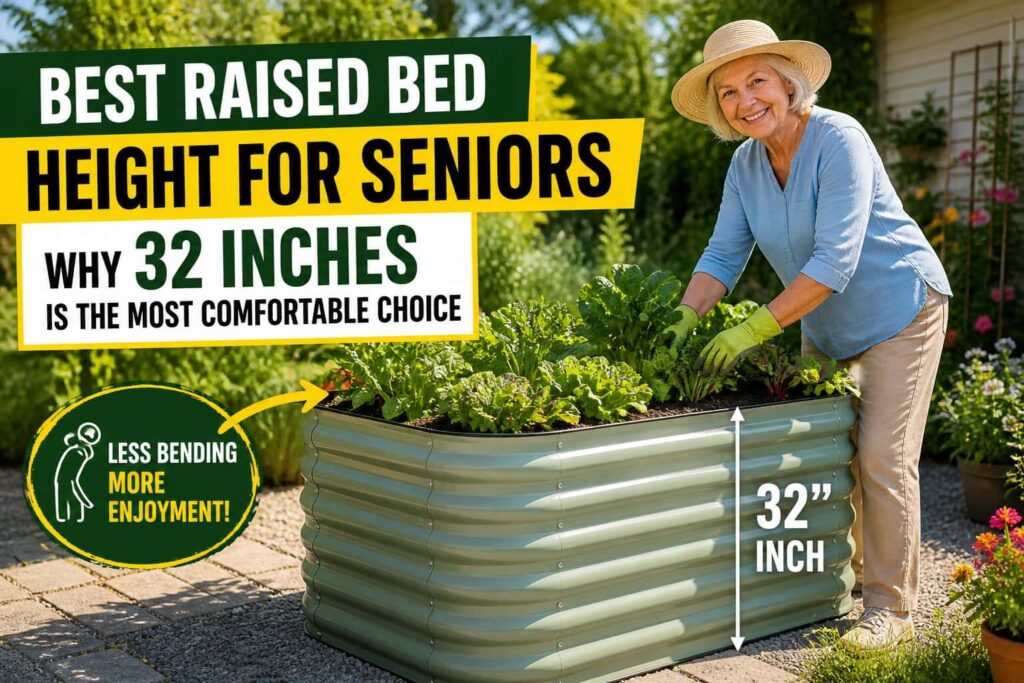
If you’re wondering what height works best for older gardeners, here’s the direct answer:
A 32-inch raised garden bed is one of the most comfortable and practical choices for seniors.
After more than 10 years of gardening—and now being in my middle years myself—I’ve learned something the hard way: the height of your garden bed matters more than the plants you grow.
When beds are too low, gardening becomes tiring faster. When they’re high enough, everything changes. You move more naturally, spend less time adjusting your posture, and enjoy the process again.
That’s exactly why many gardeners today are moving toward taller options like 32-inch beds.
In this guide, I’ll walk you through:
- Why 32 inches works so well (from both experience and practical reasoning)
- How it compares to lower beds
- What to look for when choosing a raised bed
- And how to set up a garden that actually feels good to maintain
* This video was created using NotebookLM, based on my content, so you can listen instead of reading.
Affiliate Disclosure
We’ve included links to the products mentioned in this article so you can easily check them out. Some links are affiliate links, meaning we may earn a small commission if you purchase—at no extra cost to you.
Why Height Matters More As We Age
As we get older, it’s not that we stop loving gardening—it’s that our bodies respond differently to repetitive movements.
From both observation and experience, most strain in gardening comes from:
- Frequent bending forward
- Long periods in a fixed position
- Reaching below waist level repeatedly
These movements are completely manageable in short bursts. But over time, they add up.
A Practical Way to Think About It
When your garden bed is closer to waist height:
- Your spine stays in a more neutral position
- Your arms do more of the work instead of your lower back
- You naturally take shorter, more controlled movements
This isn’t about eliminating effort—it’s about distributing effort more efficiently.
That’s where taller beds, especially around 32 inches, start to make a noticeable difference.
Why 32-Inch Raised Beds Stand Out
1. Closer to Natural Working Height
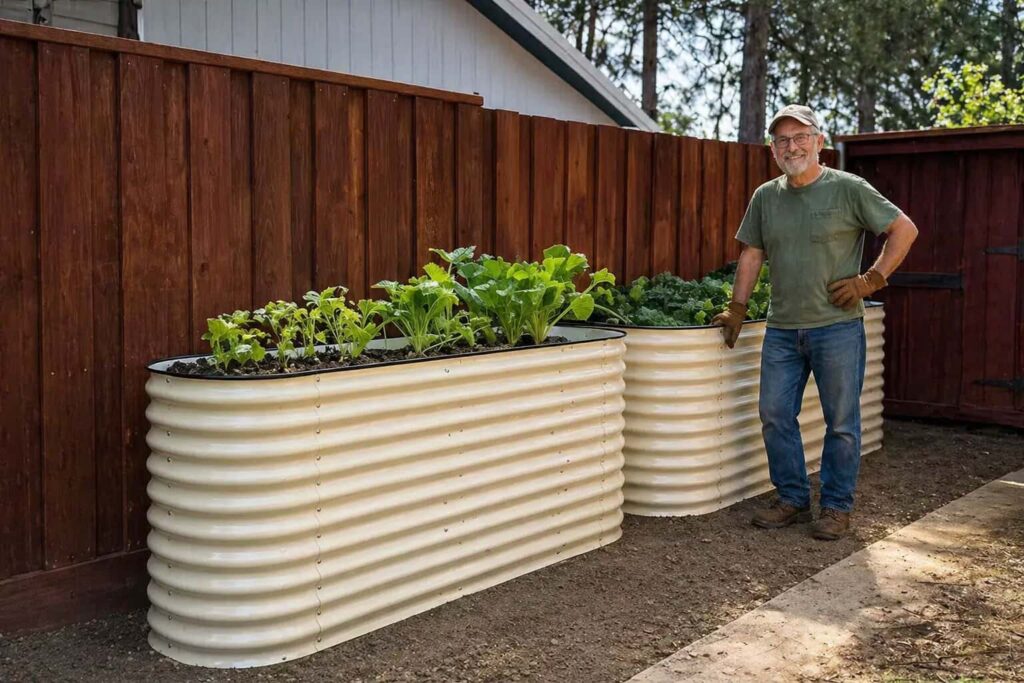
A 32-inch bed typically sits around mid-thigh to waist level for most adults.
From my own gardening routine, this means:
- Less need to lean deeply forward
- Easier reach across the bed
- More stable footing while working
Compared to lower beds, you spend less time adjusting your posture—and more time actually gardening.
2. More Comfortable for Longer Sessions
In my earlier years, I didn’t think much about posture. Now I notice it within minutes.
With a taller bed:
- You can garden longer without feeling the need to stop frequently
- Movements feel smoother and less forced
- Tasks like planting, pruning, and harvesting feel more controlled
This doesn’t mean “no fatigue”—but it often means more manageable effort over time.
3. Better Accessibility Without Special Equipment
Not everyone wants or needs fully elevated (table-style) beds.
A 32-inch raised bed is a strong middle ground:
- High enough to reduce strain
- Low enough to maintain deep planting space
- Stable and grounded
This balance is why many experienced gardeners eventually settle at this height.
4. Works Well With Real Garden Layouts
From a practical standpoint, 32-inch beds also:
- Hold more soil depth for healthy root systems
- Support a wider range of plants
- Fit well in both backyard and suburban layouts
So you’re not trading functionality for comfort—you’re getting both.
17 vs 24 vs 32 Inches: What Actually Changes?
Let’s break this down based on real-world use—not theory.
17-Inch Beds
- Still require noticeable bending
- Better than ground gardening, but limited improvement
- Suitable for younger gardeners or tight budgets
👉 From experience: You’ll likely still feel the need to adjust posture often.
24-Inch Beds
- A clear improvement
- Reduces bending significantly
- Good balance for many users
👉 This is where gardening starts to feel easier—but not effortless.
32-Inch Beds
- Brings the working area much closer to your body
- Reduces the depth of bending even further
- Encourages a more upright working position
👉 In my own garden, this is where things started to feel natural again.
Why Many Gardeners Are Switching to Metal Raised Beds
Material matters just as much as height.
Over the years, I’ve used both wood and metal. While wood has its charm, it comes with trade-offs:
- It can degrade over time
- Requires maintenance or replacement
- Performance depends heavily on climate
What Makes Metal Beds Practical
Modern galvanized metal beds:
- Are designed for long-term outdoor use
- Require minimal maintenance
- Maintain structure over many seasons
Some systems—like the modular designs used by Vegega—also focus on:
- Flexible sizing
- Simple assembly
- Clean, safe edges
From a long-term perspective, this reduces the need to rebuild or replace beds every few years.
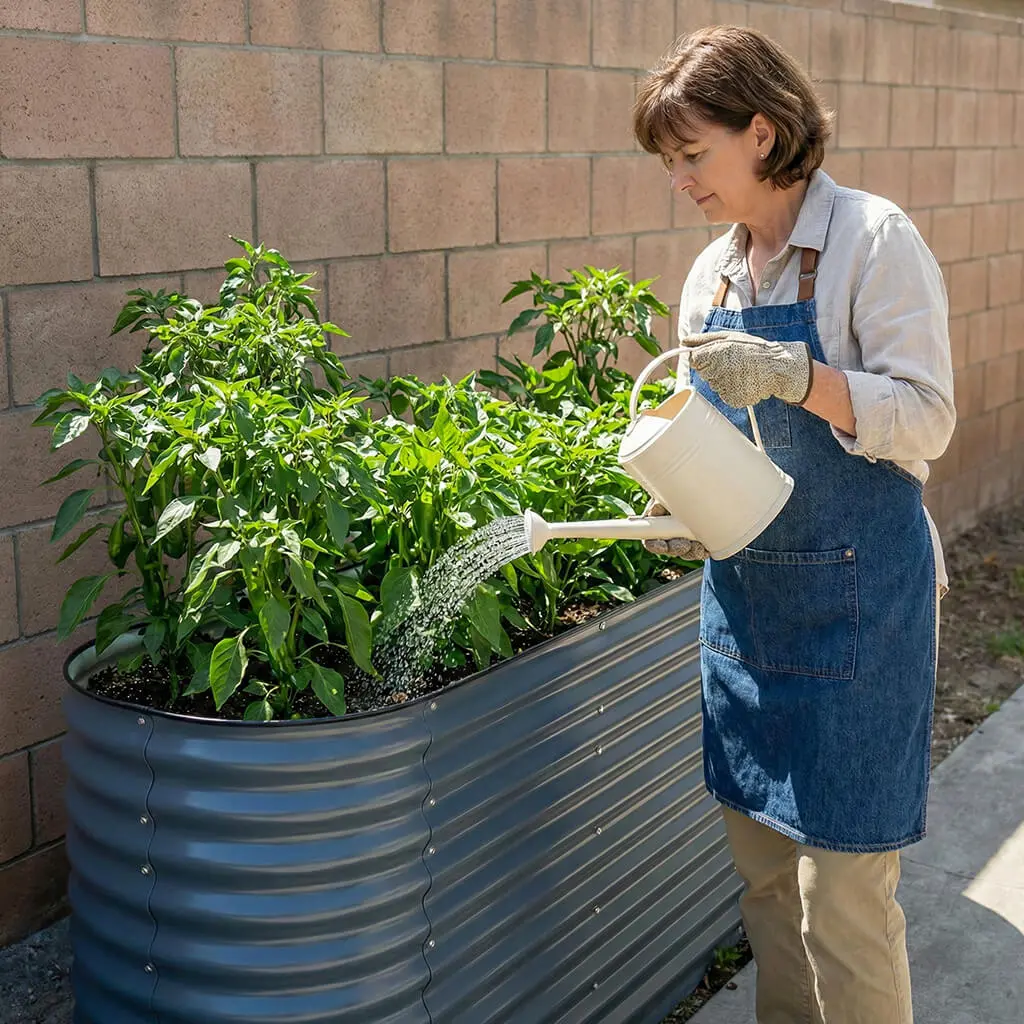
Image Source: https://www.vegega.com/
Key Features Seniors Should Prioritize
After years of trial and error, here’s what actually makes a difference:
1. Height First, Everything Else Second
Start with the right height (ideally around 32 inches).
You can adjust layout and plants—but height affects every single interaction.
2. Simple Assembly
Complicated setups can turn into a barrier.
Look for:
- Clear instructions
- Lightweight panels
- Minimal tools required
Many modern kits are designed so one person can assemble them without frustration.
3. Safe Edges and Stable Structure
This is often overlooked.
Choose beds with:
- Rounded or folded edges
- Solid corner support
It makes everyday movement around the garden more comfortable.
4. Modular Flexibility
Your garden may evolve over time.
Modular systems allow you to:
- Expand later
- Reconfigure layout
- Adapt to space changes
That flexibility becomes valuable the longer you garden.
How to Set Up a 32-Inch Raised Bed (Efficiently)
You don’t need a complicated process.
Step 1: Keep It Close
Place your bed:
- Near your home
- Along a path you already use
- In a spot with consistent sunlight
Convenience reduces effort more than anything else.
Step 2: Use Smart Filling (Layering Method)
Instead of filling entirely with soil:
- Bottom: logs or branches
- Middle: leaves or compost
- Top: quality soil
This approach:
- Reduces cost
- Improves drainage
- Supports long-term soil health
Step 3: Choose Practical Crops
Start with plants that are:
- Easy to manage
- Quick to harvest
Examples:
- Leafy greens
- Herbs
- Tomatoes
This keeps gardening rewarding without becoming overwhelming.
Common Mistakes to Avoid
Even experienced gardeners make these:
Choosing Too Low “Just to Save Money”
You’ll feel the difference every time you use it.
Overcomplicating the Setup
Simple systems are easier to maintain long-term.
Ignoring Layout
If it’s hard to reach, you’ll use it less.
Final Thoughts
After more than a decade of gardening—and now seeing things from a different stage of life—I’ve come to appreciate one simple truth:
Comfort changes everything.
A well-chosen raised bed doesn’t just improve your garden—it changes how you interact with it every day.
For many people, moving to a 32-inch raised bed is the point where gardening starts to feel enjoyable again, not because it removes effort, but because it makes that effort more natural and sustainable.If you’re considering upgrading your setup, it’s worth looking at thoughtfully designed options.