
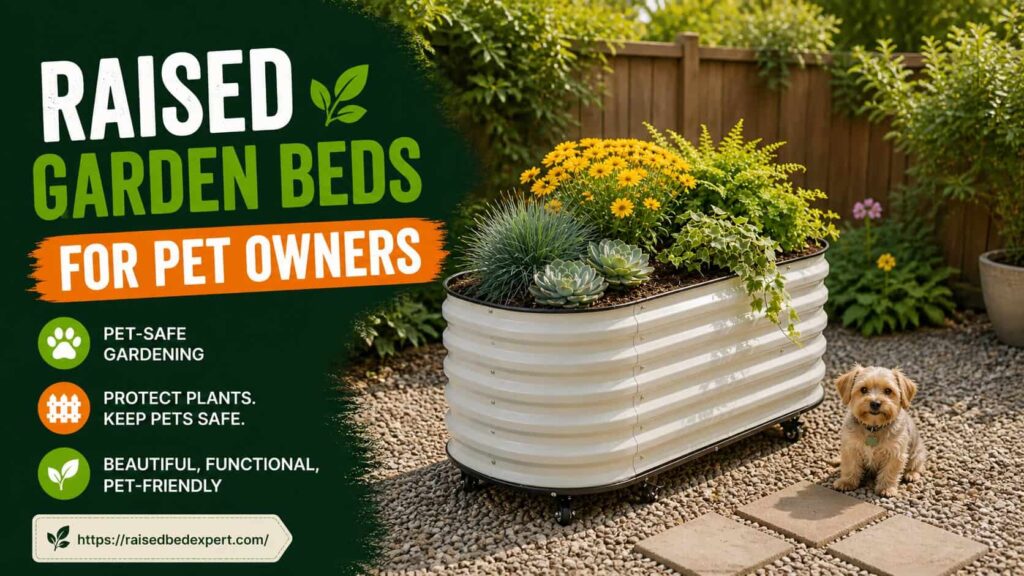
Dogs and cats get into raised garden beds because they’re easy to access, feel like natural ground, and trigger instinctive behaviors like digging, scratching, and marking. The most effective way to keep pets out is to combine height (24–30+ inches for dogs), pet-resistant design (narrow edges, smooth sides), and behavior redirection (a designated digging area)—not just rely on the bed itself.
* This video was created using NotebookLM, based on my content, so you can listen instead of reading.
You Don’t Have a Gardening Problem—You Have a Design Problem
If your dog keeps digging up seedlings or your cat turns your bed into a litter box, it’s tempting to blame training. But most of the time, the issue is simpler: your garden is unintentionally inviting.
Loose soil is soft under paws. Raised beds hold moisture and smell rich—perfect for digging. Edges offer places to step, balance, and climb. From your pet’s perspective, your garden isn’t off-limits. It’s ideal.
That’s why solutions based on scolding, sprays, or constant supervision rarely last. The behavior keeps coming back because the environment still says “yes.”
To fix the problem long-term, you need to change that signal.
Why Raised Beds Help (But Don’t Solve Everything)
Raised beds are a great starting point because they introduce physical separation. They create a defined space that’s visually and structurally different from the surrounding ground. But many gardeners stop there—and that’s where frustration begins.
- A 12–18 inch bed still feels like ground level to a medium or large dog
- A wide wooden edge becomes a convenient step or perch
- Open soil continues to invite digging and scratching
- Central placement puts the bed directly in your pet’s path
In other words, a raised bed can organize your garden—but unless designed intentionally, it doesn’t change your pet’s behavior.
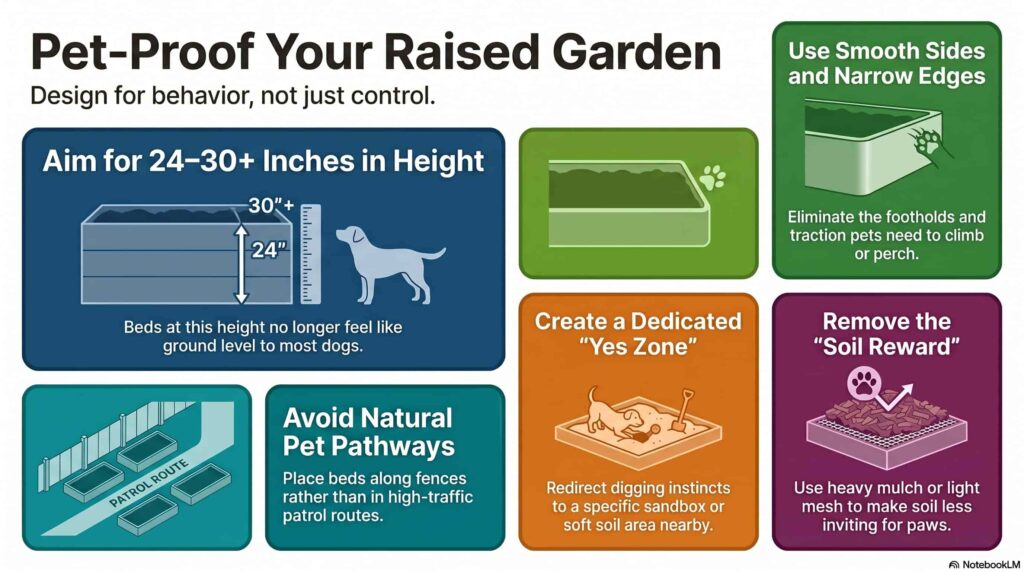
The Role of Height: What Actually Works
Height is the first lever most people think about—and for dogs, it matters a lot. But not in the way you might expect.
For Dogs
- 12–18 inches: Minimal deterrence
Still easy to step into or lean over - 18–24 inches: Some reduction in access
Smaller dogs may hesitate, but many still climb - 24–30 inches: Noticeable behavior shift
Access feels less natural, less convenient - 30+ inches: Strong deterrent
Most dogs stop attempting altogether
What’s happening here isn’t just physical limitation—it’s perception. Once a surface feels elevated enough, it no longer reads as part of the ground. The effort required outweighs the reward.
For Cats
Cats change the equation entirely.
- They jump and climb with ease
- Height alone rarely stops them
- They’re attracted to soft, loose soil
So while increasing height may reduce casual access, it won’t solve the problem. For cats, design and surface management matter far more than elevation.
Design That Discourages—Without Turning Your Garden Into a Fortress
If height is the first step, design is what makes it effective. The goal isn’t to block access completely. It’s to remove the features that make your garden appealing in the first place.
1. Eliminate Standing Space
Wide edges are an open invitation.
Dogs use them to step up and balance. Cats use them as staging points before entering. By keeping edges narrow or sloped, you remove that foothold.
- Avoid thick, flat wooden rims
- Use thinner caps or angled finishes
- Consider rounded or beveled edges
When there’s nowhere comfortable to stand, entry becomes less appealing.
2. Use Smooth, Low-Grip Materials
Texture matters more than most people realize.
Rough wood provides traction. It tells animals, “you can climb this.” In contrast, smoother surfaces subtly communicate the opposite.
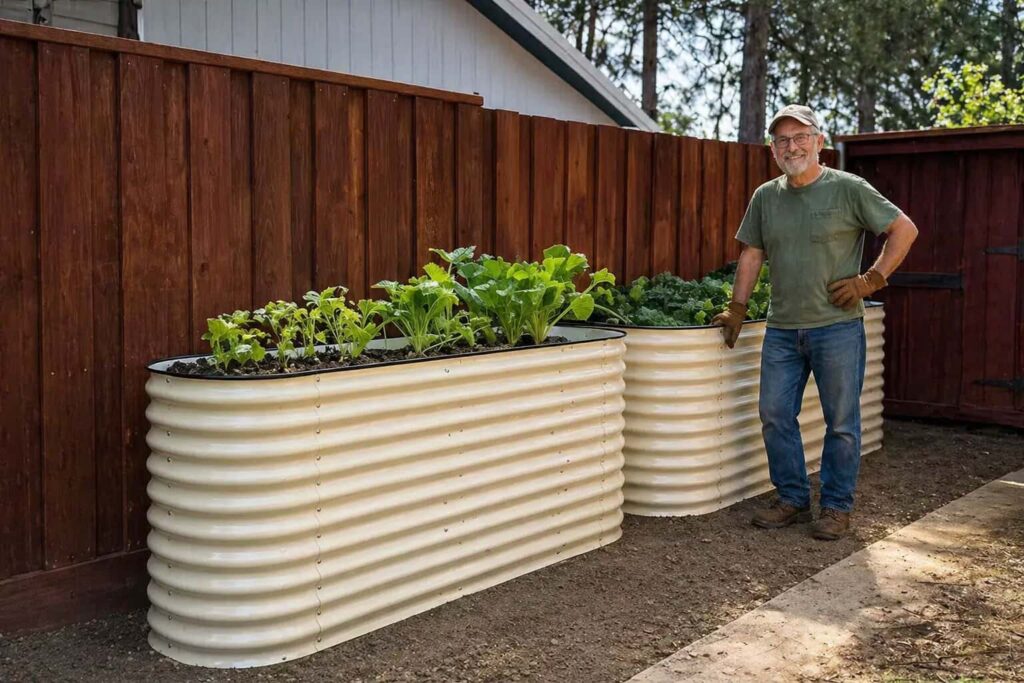
- Metal beds (galvanized steel)
- Sealed or painted wood
- Composite materials
These don’t make climbing impossible—but they make it feel less secure. That small shift is often enough to deter repeated attempts.
3. Add Light Barriers (Not Heavy Fencing)
You don’t need to cage your garden.
In many cases, a light visual or physical barrier is enough:
- Simple wire hoops with mesh
- A loose frame over the bed
- String grids or trellis tops
These work not because they’re strong, but because they introduce uncertainty. Pets hesitate when a space feels partially obstructed—even if they technically could get through.
4. Manage the Soil Surface
This is especially important for cats.
Loose, fluffy soil is irresistible. If left exposed, it almost guarantees repeated visits.
Instead, try:
- Mulch with larger bark pieces
- Straw or leaf cover
- Ground cover plants
- Light netting over soil during early growth
You’re not removing access—you’re removing the “reward.”
The Missing Piece: Behavior Redirection
Here’s where most guides fall short.
They focus entirely on keeping pets out—but ignore what happens next. If your dog can’t dig in one place, it will look for another. If your cat loses one soft spot, it will search for the next.
That’s why the most effective gardens don’t just restrict behavior—they redirect it.
Design for Behavior, Not Control
This mindset changes everything.
Instead of asking, “How do I stop my pet from doing this?”
Ask: “Where should this behavior go instead?”
Create a “Yes Zone”
Give your pet a space where their natural behavior is allowed—and even encouraged.
For dogs:
- A dedicated digging patch
- Soft soil or sand area
- Toys or buried objects to reinforce use
For cats:
- A sandbox-style area
- Loose soil corner away from beds
- Quiet, low-traffic placement
When pets have a clear alternative, they stop testing boundaries as often. Not because they’ve been forced to—but because the better option is obvious.
Reinforce Through Environment, Not Punishment
You don’t need to constantly correct your pet.
If your raised beds are slightly harder to access, slightly less comfortable, and slightly less rewarding—while another area is easier, softer, and more engaging—behavior naturally shifts.
This is the core idea:
Make the right behavior the easiest behavior.
Layout Matters More Than You Think
Even a perfectly designed bed can fail if it’s placed poorly.
Pets follow patterns. They move along familiar routes, patrol certain areas, and gravitate toward open space. If your raised bed sits directly in that path, it becomes part of their routine.
Smarter Placement Strategies
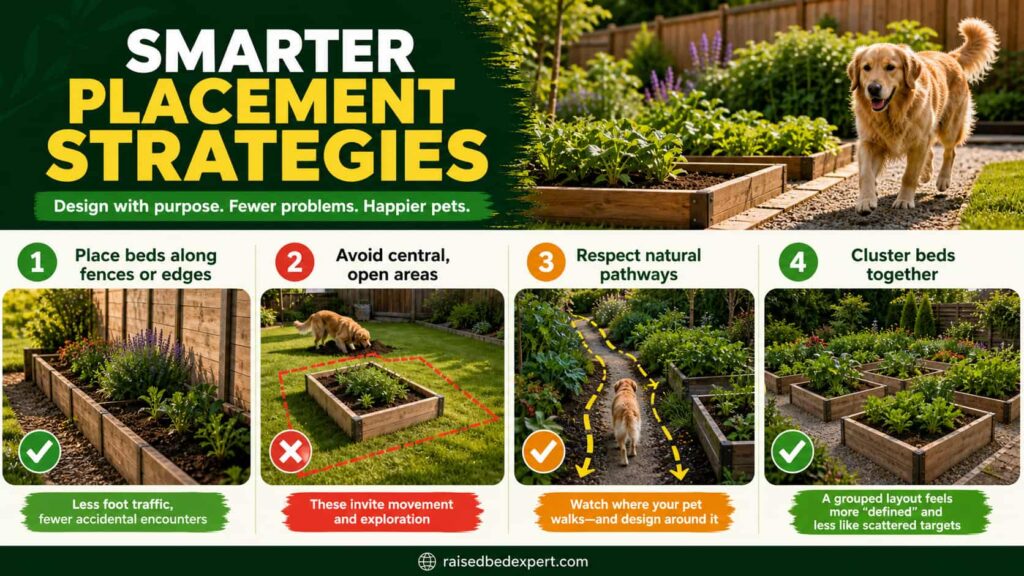
- Place beds along fences or edges
Less foot traffic, fewer accidental encounters - Avoid central, open areas
These invite movement and exploration - Respect natural pathways
Watch where your pet walks—and design around it - Cluster beds together
A grouped layout feels more “defined” and less like scattered targets
A small shift in placement can dramatically reduce interaction.
Common Mistakes That Keep the Problem Going
Even with good intentions, certain choices make it harder to succeed.
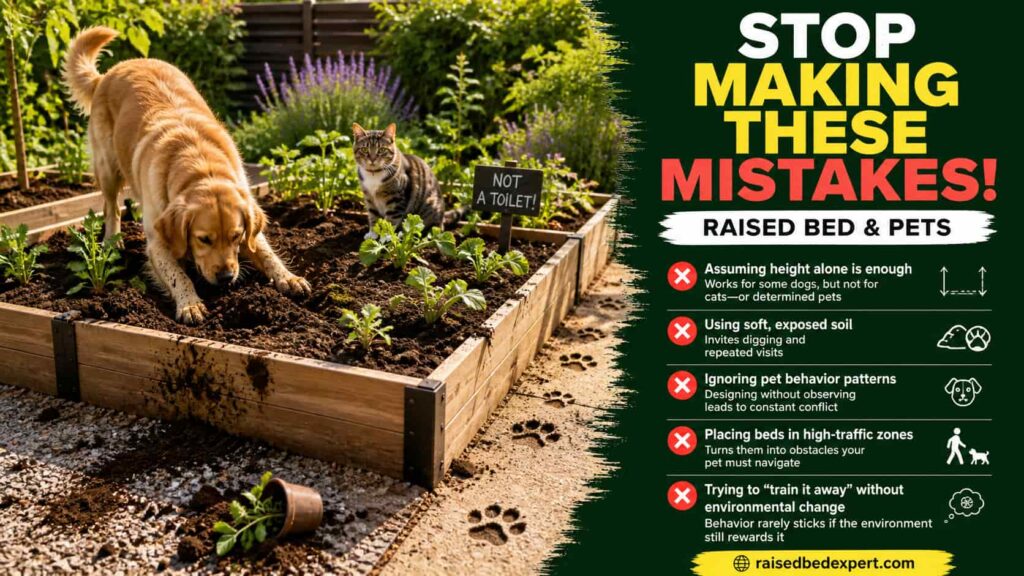
❌ Assuming height alone is enough
Works for some dogs, but not for cats—or determined pets
❌ Using soft, exposed soil
Invites digging and repeated visits
❌ Ignoring pet behavior patterns
Designing without observing leads to constant conflict
❌ Placing beds in high-traffic zones
Turns them into obstacles your pet must navigate
❌ Trying to “train it away” without environmental change
Behavior rarely sticks if the environment still rewards it
A Simple, Effective Setup (Putting It All Together)
If you want a practical starting point, here’s a setup that works for most homes:
- Raised bed at 24–30 inches
- Narrow or angled edges
- Smooth exterior surface
- Mulched or covered soil
- Placed along a boundary (fence or wall)
- Separate digging zone for pets nearby
This combination doesn’t rely on a single solution. It layers multiple small advantages—each one reducing the likelihood of unwanted behavior.
What About Training?
Training can help—but it works best when paired with design.
If your garden is easy to access and rewarding to dig, training becomes a constant battle. If your design already discourages entry, training becomes reinforcement—not resistance.
Think of it this way:
- Design sets the default behavior
- Training supports it
Not the other way around.
A Garden That Works With Your Pets, Not Against Them
A pet-friendly garden isn’t built by blocking every behavior—it’s built by guiding it.
Start with one change. Raise a single bed higher. Narrow the edges. Add a small digging zone for your dog or a soft corner for your cat. You don’t need to redesign everything overnight. Small shifts in design create big changes in behavior.
And once you see the difference, gardening stops feeling like control—and starts feeling effortless again.
Tina’s Perspective: Design Should Replace Discipline
Most people try to fix this problem with training. I used to think the same—until I realized something simple:
Pets don’t break rules. They follow instincts.

When a dog digs in your raised bed, it’s not being “bad.” It’s responding to soft soil, familiar ground, and easy access. When a cat keeps coming back, it’s because your garden feels like the safest, most comfortable place available.
That’s why I don’t design gardens to control behavior.
I design them so the “wrong” behavior stops making sense.
A slightly higher bed. A harder surface to land on. A better place to dig nearby.
When the environment changes, behavior follows—naturally, consistently, and without stress.And in the end, that’s what a good garden should do.
Not just grow plants well—but quietly shape everything around it to work better, together.