
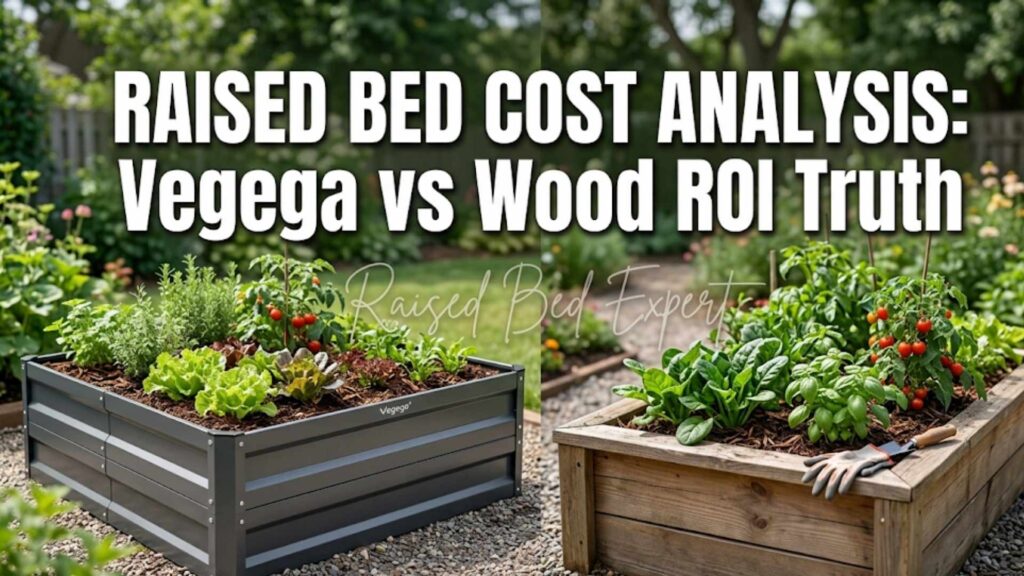
A professional raised bed cost analysis reveals that while a wooden bed requires a lower initial investment of approximately $120 to $150, high-quality metal beds like Vegega provide a 300% higher long-term ROI by eliminating the 3-year replacement cycle common with timber. As a Raised Bed Expert, I have analyzed the math across hundreds of American backyard setups, and my professional stance is clear: if you plan to garden for more than three years, investing in a Vegega metal bed is the only choice that prevents your hobby from becoming a recurring financial drain.
When most gardeners start their first raised bed project, they focus on the “now.” They see the price of a few 2×12 cedar planks at Home Depot and think they are saving money. However, in the world of gardening, the lowest entry price rarely equals the lowest total cost of ownership.
The truth is that traditional raised bed gardening in the United States faces two major enemies: climate and labor costs. Whether you are dealing with the intense humidity of the Southeast or the constant moisture of the Pacific Northwest, wood is a biological material designed to break down. By contrast, modern Aluzinc metal beds are engineered to resist these elements for decades. This article will break down the hard numbers, the labor variables, and the return on investment (ROI) to show you exactly where your money goes over 10 to 20 years.
*This video was created using NotebookLM, based on my content, so you can listen instead of reading.
Overview of Popular Raised Bed Options
The Traditional Wood Bed
For decades, wood has been the default. It’s familiar, it looks “natural,” and it’s available at any local lumber yard.
- Initial Cost: Relatively low ($80 for pine, $180 for cedar).
- Lifespan: Depending on your zone, untreated pine lasts 2–3 years; cedar might reach 5–7 years if you’re lucky.
- The Reality: Wood warps, splits, and eventually rots. Once the structural integrity fails, the soil spills out, and the bed becomes a breeding ground for termites and carpenter ants.
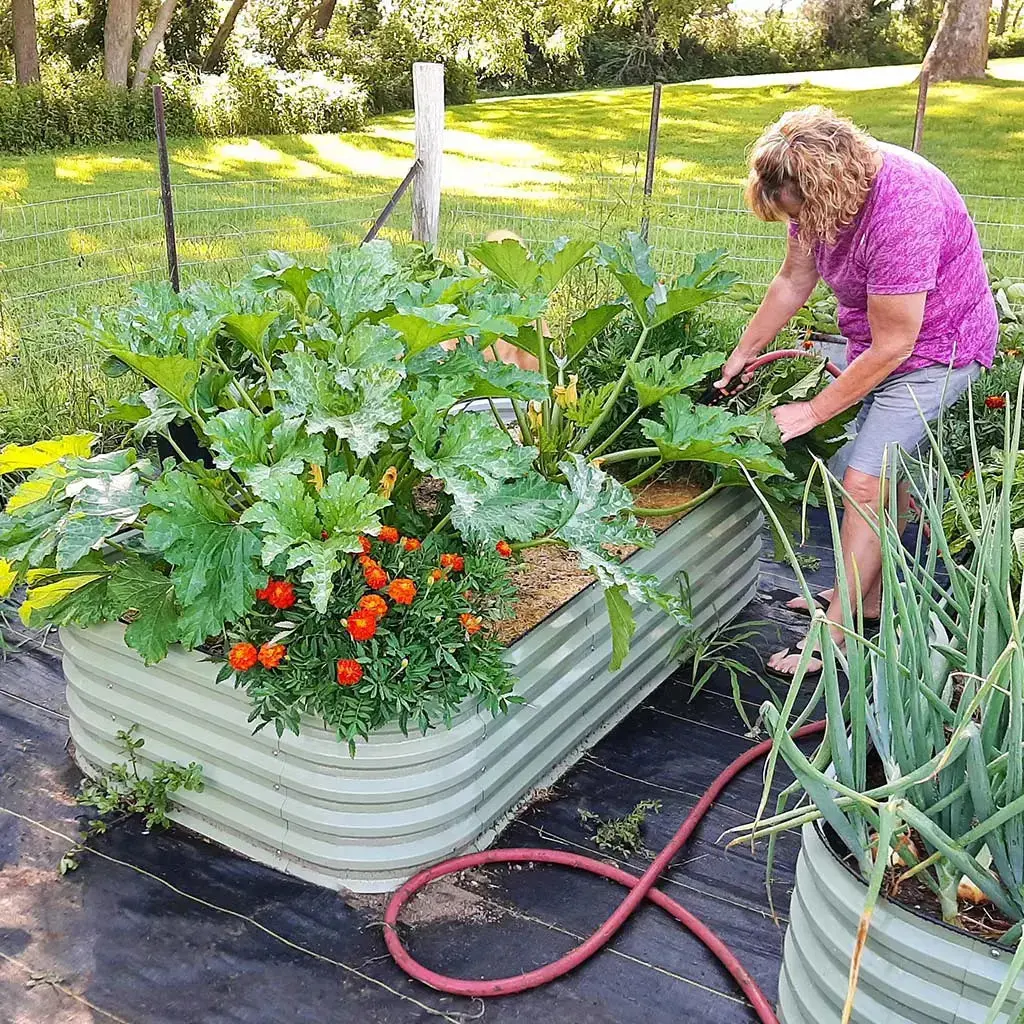
Image Source: https://www.vegega.com/
The Modern Metal Bed (Vegega)
Metal beds have shifted from industrial eyesores to high-performance garden tech. Vegega utilizes Aluzinc (a combination of Aluminum, Zinc, and Magnesium).
- Initial Cost: Mid-to-high ($180–$250).
- Lifespan: Rated for 20–25 years.
- The Reality: These beds do not rot, they are modular, and they require zero maintenance once assembled. They reflect heat rather than absorbing it, protecting your soil’s microbial life.
Initial Cost Breakdown: The Year 1 Comparison
Let’s look at the upfront costs for a standard 4’x8′ raised bed with a 17-inch depth.
| Cost Component | Standard Cedar Bed | Vegega Metal Bed |
|---|---|---|
| Material/Kit Price | $160.00 | $195.00 |
| Hardware (Screws/Brackets) | $15.00 | Included |
| Tools Required | Drill, Saws, Clamps | Included Wrench |
| Estimated Labor (Time) | 2–3 Hours | 20–30 Minutes |
| Estimated Labor (Cost) | $60.00 (DIY value) | $15.00 (DIY value) |
| Total Year 1 Cost | $235.00 | $210.00 |
Expert Insight: Many beginners forget that wood isn’t “ready to go.” You have to measure, cut, and pilot-hole every board. If you value your weekend time at even $25/hour, the “cheaper” wood bed actually costs more than a Vegega kit by the time the first seed is planted.
Long-Term Cost Analysis: The 10-Year Trap
This is where the raised bed cost analysis becomes eye-opening. Wood is not a one-time purchase; it is a subscription model you didn’t sign up for.
The Wood Replacement Cycle
In most US climates, a wooden bed begins to lose its structural integrity by year 3. By year 4, the corners usually blow out.
- Cycle 1 (Year 0): Buy bed #1.
- Cycle 2 (Year 4): Buy bed #2 + Disposal of old wood.
- Cycle 3 (Year 8): Buy bed #3 + More labor.
Cumulative Cost Comparison (10-Year Projection)
| Time Period | Cedar Wood Total Spent | Vegega Metal Total Spent |
|---|---|---|
| Year 1 | $235 | $210 |
| Year 3 | $235 | $210 |
| Year 6 | $470 (1st Replacement) | $210 |
| Year 10 | $705 (2nd Replacement) | $210 |
The Verdict: By year 10, the gardener who chose wood has spent over $700 for the same square footage that the Vegega owner secured for $210.
The Hidden Costs You Are Probably Ignoring
If the raw material costs didn’t convince you, the “hidden” logistics of wood gardening will.
- Labor Inflation: The cost of lumber in the U.S. has been volatile. Replacing a bed in 2029 will likely cost significantly more than it does today.
- Soil Loss and Contamination: When a wooden bed rots, it often collapses outward. You lose high-quality, expensive organic soil into the surrounding yard. Furthermore, if you use pressure-treated wood to “save money,” you risk heavy metals or chemicals leaching into your organic vegetables.
- Disposal Fees: You cannot simply throw 200 lbs of rotten, dirt-caked wood in your kitchen trash. Many US municipalities charge “bulk waste” fees or require you to haul it to a transfer station.
- Pest Attractions: Decaying wood is an invitation for termites. If your raised beds are near your home’s foundation, a rotting wooden bed is a massive liability.
ROI Analysis: The Math of Performance
The ROI Formula
To calculate your Return on Investment, we look at the “Avoided Cost.”

Real-World ROI Benchmarks
- After 3 Years: The ROI is technically negative because both beds are still standing, and metal was slightly more expensive upfront.
- After 5 Years: The ROI hits 0% (The Break-Even Point). This is when the first wood bed usually fails.
- After 10 Years: The ROI jumps to over 200%. You have saved the cost of two entire garden setups.
- After 20 Years: The ROI exceeds 500%. At this stage, your Vegega bed is still producing, while a wood-based garden would be on its 5th or 6th iteration.
Case Study: A Tale of Two Backyard Gardeners
In 2018, I consulted for two neighbors in Austin, Texas.
- Gardener A (John): Chose 2″ thick Cedar planks because he liked the look. Total cost for 4 beds: $800.
- Gardener B (Sarah): Chose Vegega metal beds. Total cost for 4 beds: $900.
The Update (2024): John’s beds reached their breaking point last spring. The cedar had turned grey, bowed significantly, and the bottom boards had rotted into the earth. He spent another $1,100 (due to lumber price increases) and two full weekends rebuilding them. Total spend: $1,900.
Sarah’s Vegega beds? She sprayed them with a hose, and they looked brand new. She spent $0 on maintenance. Total spend: $900.
Sarah saved $1,000 and four days of back-breaking labor simply by choosing the right material from the start.

When Should You Actually Choose Wood?
Despite the math, there are specific scenarios where wood makes sense:
- The “Short-Timer”: If you are renting a home and only plan to be there for 1–2 years, don’t invest in long-term infrastructure. Buy the cheapest pine boards possible.
- The DIY Purist: If you have a woodshop, free scrap lumber, and you enjoy the process of building things every few years, wood provides a creative outlet.
- Strict Aesthetics: If your HOA (Homeowners Association) has ancient rules that specifically mandate “natural timber,” you may be forced into the wood cycle.
Why Vegega Wins for Serious Gardeners
If you are a “forever gardener,” Vegega is the logical choice for three reasons:
- Stability: The soil biology remains undisturbed for 20 years.
- Health: No chemical leaching, ensuring your “organic” label actually means something.
- Economy: You pay for it once. You never have to explain to your spouse why you’re spending another $500 at the hardware store to “fix the garden” again.
Conclusion: The Final Verdict
The raised bed cost analysis is conclusive. If you look at your garden through a 1-year lens, wood is cheaper. If you look through a 5-year lens, metal is equal. If you look through a 10-year lens, metal is the only choice that makes financial sense.
My Expert Recommendation: Stop renting your garden from the lumber yard. Buy a high-quality metal bed like Vegega once, and spend the next two decades spending your money on seeds and fertilizer, not replacement boards.