
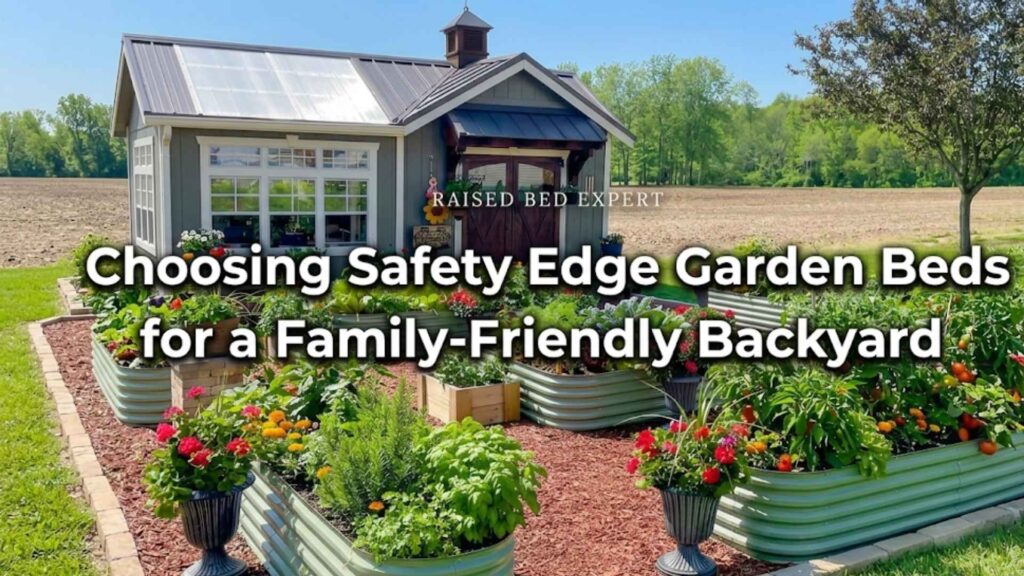
Safety edge garden beds are specially designed raised planters that feature a rolled top rim or a protective rubber gasket to eliminate sharp metal edges, providing a truly child-friendly gardening experience. As a mother of two energetic toddlers, I’ve learned that the secret to a successful family garden isn’t just the quality of the soil, but the physical safety of the structures where our children play and learn.
The “Heart-in-Throat” Moment Every Gardening Mom Knows
I’m Tina, and if you saw my backyard, you’d see a mix of chaotic toy piles and lush vegetable rows. I’ve been gardening for years, but my perspective shifted the moment my kids started walking.
I remember a sunny afternoon when my four-year-old was sprinting toward the tomato patch to find a “big red one.” He tripped—as kids do—and his hands flew out toward the rim of our old galvanized bed. My heart stopped. That bed had a “raw” edge, thin and sharp enough to act like a blade. He was lucky that day and only got a small scratch, but it was the wake-up call I needed.
Most people think about the harvest; I started thinking about the liability. That’s when I pivoted my focus. As a Raised Bed Expert, I’ve spent the last few years testing different materials to find the balance between a professional-grade garden and a safe playground.
*This video was created using NotebookLM, based on my content, so you can listen instead of reading.
Understanding Garden Bed Edge Protection: What Is It?
In the world of metal raised beds, “safety” isn’t a generic term. It refers to how the manufacturer finishes the top of the panel. When steel is cut, it leaves a burred, razor-thin edge. Garden bed edge protection solves this in two ways:
- The Rolled Rim: The metal is machine-folded 180 degrees back onto itself. This creates a thick, smooth, rounded top that is part of the metal panel.
- The Protective Gasket: A heavy-duty U-channel (usually made of EPDM rubber) that snaps over the edge.
For a mom, the “rolled rim” is the gold standard because kids can’t pull it off, and it won’t degrade in the sun like cheap plastic might.
Evaluating the Performance: The Pros and Cons
I don’t believe in “perfect” products. Every design choice has a trade-off. Here is my honest breakdown of using rounded edge garden beds compared to the standard raw-edge versions.
Performance Comparison Table
| Feature | Safety Edge / Rolled Rim | Standard “Raw” Metal Bed |
|---|---|---|
| Physical Safety | High; rounded and blunt to the touch. | Low; thin edges can cause cuts. |
| Structural Rigidity | High; the roll acts as a support beam. | Moderate; panels may bow over time. |
| Longevity | Excellent; protects the cut steel core. | Moderate; rust often starts at the rim. |
| Ease of Use | Comfortable for leaning and sitting. | Can be uncomfortable or “sharp” on skin. |
| Initial Cost | Higher (requires precision engineering). | Lower (basic industrial shearing). |
| Maintenance | May trap tiny bits of soil in the fold. | No folds, but prone to rim corrosion. |
Why “Family-Friendly” Means More Than Just Safety
When we talk about child-safe raised beds, we aren’t just talking about avoiding the ER. We are talking about engagement.
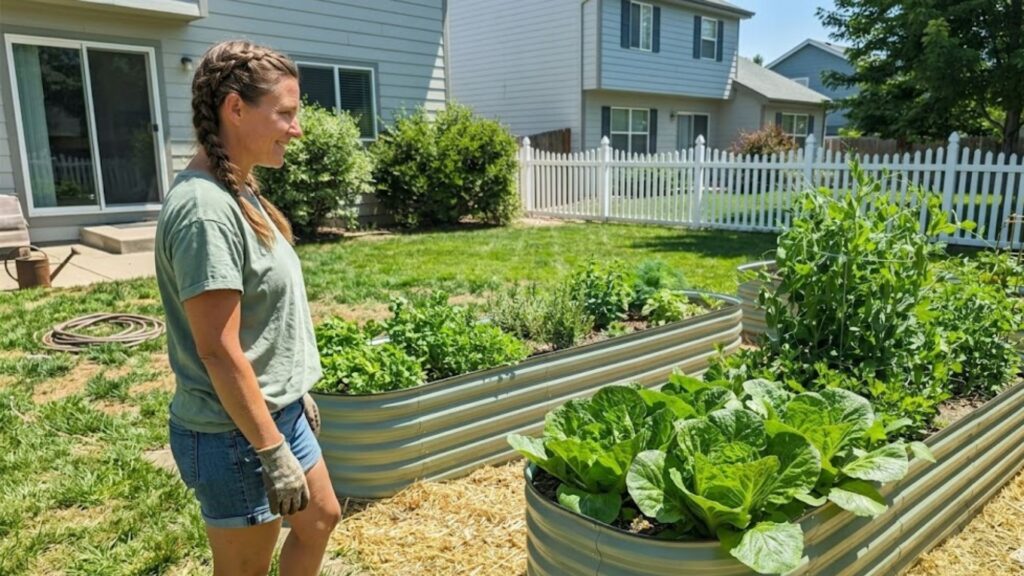
If I’m constantly shouting “Don’t touch that!” or “Stay back from the edge!” my kids aren’t going to enjoy the garden. They’ll see it as a restricted zone. Once I installed safe metal garden beds for kids, the atmosphere changed. My kids now sit on the edge of the beds to plant seeds. They lean their bellies against the rim to reach for strawberries.
The edge protection turned the garden from a “work zone” into a “living room.”
Detailed Breakdown: Is This Right for You?
Not every garden needs a safety edge, but for certain groups, it’s a non-negotiable requirement.
1. Families with Children or Grandchildren
If you have toddlers or school-aged kids, this is essential. Kids don’t walk; they run, tumble, and climb. A standard metal bed is roughly 12-17 inches high—the exact height of a child’s face or chest. A safety edge turns a potential hazard into a smooth bumper.
2. Pet Owners (Especially Dog Parents)
Our dog, Buster, thinks he’s a mountain goat. He jumps against the beds when he sees a squirrel. Raw metal edges can slice a dog’s paw pads or underbelly. If your pets are part of your backyard life, choose a rolled rim.
3. Senior Gardeners
As we age, our skin becomes thinner and more prone to “paper cuts” and bruising. A rounded edge allows an older gardener to lean their forearms on the bed for stability without worrying about skin tears.
4. Urban & Small-Space Gardeners
If your garden is in a tight patio or a narrow side yard, you are constantly walking past it. I’ve ruined two pairs of leggings by snagging them on a cheap, raw-edge metal bed. A safety edge is “snag-free.”
Who This Is NOT For:
- Commercial Production Farms: If your garden is a fenced-off “no-go” zone for kids and you only enter with heavy gloves and work boots, you can save the money and buy utility-grade beds.
Aesthetic-Only Gardens: If the beds are purely decorative and located in a spot where no humans or pets ever touch them.
Buying Guide: Tina’s Expert Tips
If you are shopping for protective edging for metal beds, here is what I look for before I click “buy”:
- Check the “Under-Fold”: Some brands fold the metal 90 degrees but leave the sharp edge pointing down. Look for a full 180-degree roll where the edge is tucked completely away.
- Material Matters: If the bed uses a rubber trim, ask if it’s EPDM. This is the same stuff used in car windshield seals; it won’t crack in the summer heat.
- Corner Integrity: Corners are the sharpest part. Ensure the safety trim or roll continues seamlessly around the curves.
Final Thoughts: A Garden for the Whole Family
At the end of the day, gardening is about more than just food. It’s about the memories we make with our kids—the messy hands, the excitement of the first sprout, and the quiet afternoons outside.
Choosing safety edge garden beds was the best decision I made for my peace of mind as a mom. It allowed me to stop being a “safety warden” and start being a gardener again. If you want a space where your kids can be kids and your plants can thrive, don’t compromise on the edges.