
Aluzinc VZ 2.0 is an advanced cold-rolled galvanized steel substrate coated with a specialized alloy of aluminum, zinc, and magnesium, engineered to provide maximum corrosion resistance for raised garden beds. Unlike standard metal sheets, this specific 2.0 iteration is designed to withstand the highly corrosive nature of wet, nutrient-rich soil, offering a lifespan that can reach up to 20 or even 30 years in stable environments.
For many years, gardeners were forced to choose between rot-prone timber or basic galvanized steel that would eventually succumb to rust. As the industry has evolved, the demand for materials that balance structural integrity with chemical safety has skyrocketed. In this guide, we will break down why this specific alloy is becoming the gold standard for backyard food production.
What Exactly is Aluzinc VZ 2.0?
To understand Aluzinc VZ 2.0, you have to look at the chemistry of the coating. Standard galvanized steel uses a pure zinc coating. While zinc protects the steel, it is a “sacrificial” layer that wears away relatively quickly when exposed to the acidity of organic fertilizers and constant moisture.
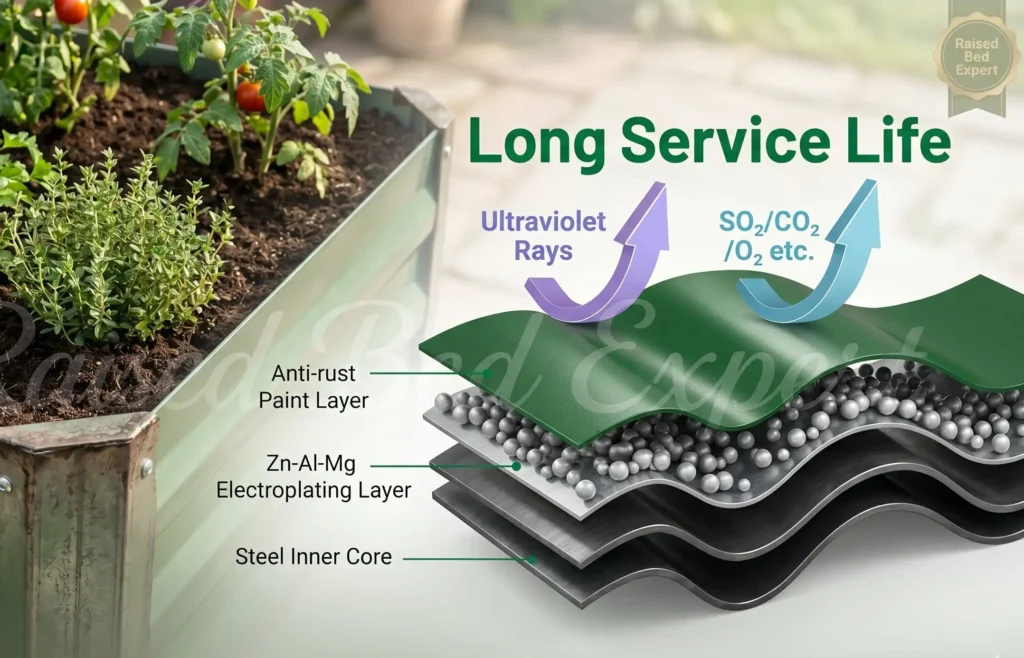
Aluzinc VZ 2.0 improves upon this by using a precise blend:
- Aluminum (55%): Provides a barrier against corrosion and reflects heat.
- Zinc (43.4%): Offers sacrificial protection for the steel core.
- Magnesium and Silicon (1.6%): The “secret sauce” of the VZ 2.0 formula. Magnesium stabilizes the coating, allowing it to “heal” itself if the surface is scratched or cut during assembly.
This material is primarily used in industrial roofing and high-end agricultural structures because it can survive harsh weather for decades without losing its structural integrity.
*This video was created using NotebookLM, based on my review content, so you can listen instead of reading.
Is Aluzinc Safe for Garden Beds?
When growing food for your family, the most critical question isn’t how long the bed lasts, but whether the material is safe. One of the most frequent questions I receive is: Is Aluzinc safe for edible gardening? The answer is a definitive yes.
100% Non-Toxic and Leach-Proof
Unlike pressure-treated lumber (which historically contained arsenic and currently uses high concentrations of copper) or cheap plastics (which can shed microplastics and phthalates), Aluzinc VZ 2.0 is chemically stable. Under normal soil pH levels (typically 5.5 to 7.5 for most vegetables), the alloy coating does not break down or leach harmful heavy metals into the root zone.
USDA-Approved Characteristics
While the USDA does not “approve” specific brands of metal, the components used in Aluzinc VZ 2.0 meet the rigorous standards for organic farming equipment. The materials are inert, meaning they do not react with the biology of the soil. This makes it a preferred choice for those following strict organic protocols.
Eco-Friendly Materials
Sustainability is a core pillar of modern gardening. Aluzinc is 100% recyclable. Furthermore, because it lasts 4–5 times longer than wood, the “carbon footprint” per year of use is significantly lower. You aren’t cutting down trees every six years to replace rotted sideboards.
Image Source: https://www.vegega.com/
How Does It Compare?
When choosing a material for your garden, it helps to see how Aluzinc VZ 2.0 stacks up against the traditional competition.
| Feature | Aluzinc VZ 2.0 | Standard Galvanized | Cedar/Redwood | Plastic/Resin |
|---|---|---|---|---|
| Lifespan | 20+ Years | 5–7 Years | 8–12 Years | 5–10 Years |
| Corrosion Resistance | Exceptional (Self-healing) | Moderate | N/A (Rots) | High |
| Toxic Leaching | None | Minimal Zinc | Possible (Treatments) | Microplastics |
| Thermal Regulation | High Reflectivity | Moderate | High Insulation | Traps Heat |
| Eco-Friendliness | Fully Recyclable | Recyclable | Biodegradable | Low |
Aluzinc vs. Wood
Wood is beautiful but high-maintenance. Even the best cedar will eventually succumb to fungi and moisture. Aluzinc provides a modern, clean aesthetic that requires zero staining, sealing, or replacement for decades.
Aluzinc vs. Standard Galvanized
If you buy a cheap metal bed from a big-box store, it is likely G90 galvanized steel. In my experience, these beds begin to show rust at the hardware points and the soil line within three seasons. Aluzinc VZ 2.0’s magnesium component prevents this localized “edge rust,” making it a much smarter long-term investment.
Some Features You Already Love (And Some You Didn’t Know)
Beyond the technical specs, there are practical reasons why this material has become a favorite among professional landscapers and hobbyists alike.
Superior Thermal Performance
A common myth is that metal beds will “cook” the plants. In reality, the high aluminum content in Aluzinc VZ 2.0 reflects the majority of the sun’s infrared radiation. While the metal surface might feel warm to the touch, the soil inside stays cooler than it would in a dark plastic or thick wooden container. This prevents root shock during extreme summer heatwaves.
Structural Rigidity
Soil is heavy. A 4×8 raised bed filled with moist soil can exert hundreds of pounds of outward pressure. The VZ 2.0 steel is high-tensile, meaning it can be thinner (and lighter to ship) while maintaining more strength than much thicker wooden planks. It won’t bow or crack under the weight of your harvest.
The “Self-Healing” Property
As a Raised Bed Expert, I’ve seen many beds ruined by a simple accidental nick from a weed whacker or a garden trowel. With standard coatings, that scratch is the beginning of the end. With Aluzinc VZ 2.0, the magnesium in the coating migrates to the scratch, creating a new protective layer that seals the steel core back up. It’s essentially an immune system for your garden bed.
Expert Evaluation: Pros and Cons
I believe in being direct about products. No material is “perfect” for every single scenario.
Image Source: https://www.vegega.com/
The Good
- Unmatched Longevity: You likely won’t have to replace these beds in your lifetime.
- Ease of Assembly: Most VZ 2.0 kits use a modular bolt system that is much easier on the back than hauling heavy 4×4 timbers.
- Safe for Edibles: You can grow everything from leafy greens to root vegetables without worrying about chemical uptake.
The Bad
- Upfront Cost: It is more expensive than a DIY pine bed. If you are on a very tight budget, this might feel like a splurge.
- Industrial Look: While many love the “modern farmhouse” vibe, some traditionalists still prefer the look of natural wood, even with the maintenance trade-offs.
- Hardware Quality: While the Aluzinc panels are top-tier, some manufacturers pair them with cheap stainless steel bolts that can strip. Always check that the hardware matches the quality of the panels.
Who is Aluzinc VZ 2.0 For?
This material is ideal for:
- Serious Homeowners: People who want to build a permanent garden infrastructure that adds value to their property.
- Organic Enthusiasts: Gardeners who are vigilant about soil contamination and want a 100% non-toxic environment.
- Urban Gardeners: Those working in small spaces where clean lines and vertical strength are important.
This material is NOT for:
- Temporary Renters: If you are in a home for less than two years, the investment in high-end metal beds may not be recouped.
- Budget-Only Projects: If the goal is simply to get seeds in the ground as cheaply as possible, recycled pallets (heat-treated only!) or fabric grow bags are a better short-term fix.
Final Thoughts: The Inclusion of Quality
Choosing Aluzinc VZ 2.0 is an investment in the “set it and forget it” philosophy of gardening. By removing the cycle of rot and replacement, you allow yourself more time to focus on what actually matters: your soil biology and your plant health. When you consider the safety profile—being 100% non-toxic and eco-friendly—it becomes clear why the industry is moving away from traditional materials.
If you are looking to build a garden that stands the test of time while keeping your food as pure as possible, this alloy is the most logical choice available on the market today.
Pingback: The Truth About Metal vs. Wood Raised Beds
Pingback: Raised Bed Cost Analysis: Vegega vs Wood ROI Truth