
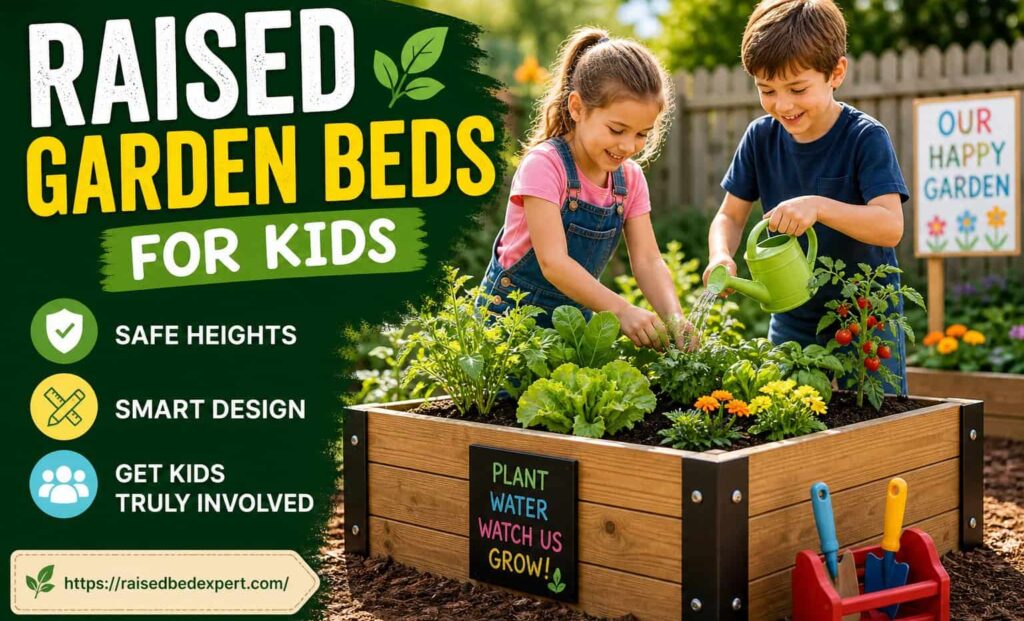
The best raised garden bed setup for kids uses age-appropriate heights: 12–18 inches for younger children, 18–24 inches for older kids, and 24–32 inches for shared family gardening.
These heights work because they match how kids naturally move, reach, and interact—making gardening easier, safer, and far more engaging.
But after raising two kids and gardening for over 10 years, I’ve learned something more important:
Kids don’t fall in love with gardening because of plants.
They fall in love with it because of how the space feels.
And if the setup isn’t right, they lose interest faster than you expect.
* This video was created using NotebookLM, based on my content, so you can listen instead of reading.
Affiliate Disclosure
We’ve included links to the products mentioned in this article so you can easily check them out. Some links are affiliate links, meaning we may earn a small commission if you purchase—at no extra cost to you.
Why Raised Garden Beds Work So Well for Kids (Not Just Adults)
Most parents think raised beds are about convenience, but for kids, they solve something deeper. Children don’t naturally understand rules like “don’t step there” or “be careful with the plants.” Instead, they respond to space through what they can see, touch, and physically navigate.
A raised garden bed creates a clear visual and physical boundary. It quietly teaches them where the garden begins and ends without needing constant reminders.
From my experience, this changes behavior almost immediately. Kids stop running through the space and start moving around it. They begin reaching in, observing, and interacting more intentionally—not because they were told to, but because the setup guides them.
Why Height Is the Most Important Decision You’ll Make
When it comes to raised garden beds for kids, height matters more than materials, plants, or layout because it directly shapes behavior.
If a bed is too low, it blends into the ground and invites kids to step into it. If it’s too high, it feels out of reach and they disengage.
The goal is simple:
Make it easy to reach, but not easy to step into.
Once you get this balance right, everything else becomes easier—from safety to engagement.
The Best Raised Garden Bed Height for Kids (By Age)
| Age Group | Best Height | Core Behavioral Trait | Key Benefit |
|---|---|---|---|
| Ages 3–5 | 12–18 inches | Explores through movement & climbing. | Easy to reach; prevents stepping in soil. |
| Ages 6–10 | 18–24 inches | Better coordination & loves ownership. | Encourages independence & regular care. |
| Ages 10+ | 24–32 inches | Adult-like skills & enjoys sharing tasks. | Matches adult height; reduces back strain. |
Ages 3–5: When Everything Is Exploration
At this stage, children experience the world primarily through movement and physical interaction. They don’t yet separate play from structure, which means they will sit, lean, climb, and step wherever their curiosity takes them. Instructions alone rarely work consistently because their understanding of boundaries is still developing.
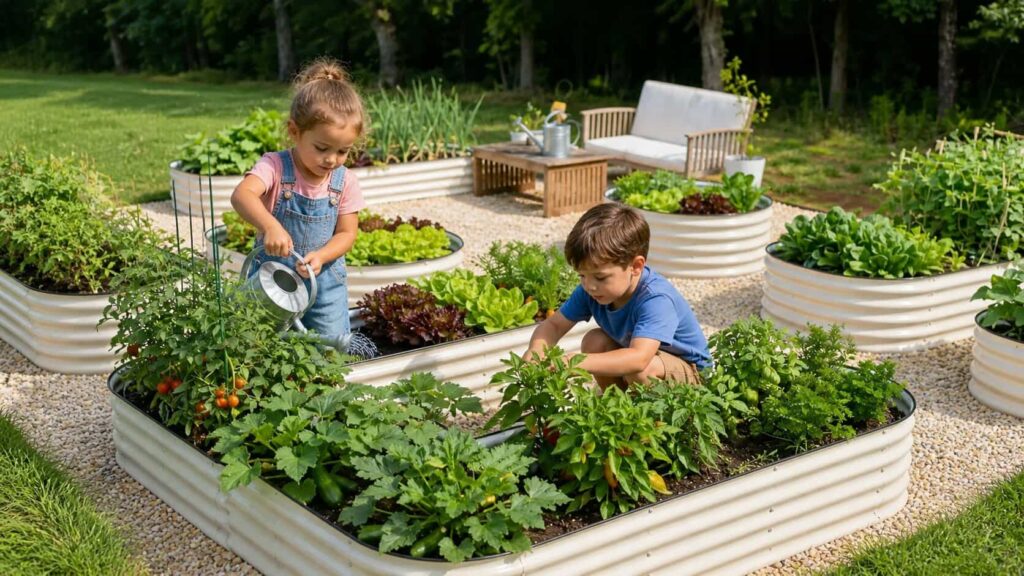
👉 Best height: 12–18 inches
- At this height, the bed feels easy to reach and explore, while still creating a subtle boundary that signals this space is different from the ground.
- When the bed is too low, kids tend to step directly into the soil and treat it like part of their play area, often without realizing they’re damaging plants.
- When it’s too high, they lose interest quickly because they can’t interact with the plants independently.
- From my own experience, curiosity shows up naturally the moment kids can reach in and touch things on their own.
Ages 6–10: When Kids Start Taking Ownership
As kids grow, their relationship with the garden begins to change. They develop better coordination, start understanding cause and effect, and become more capable of following simple routines. Psychologically, this is also when they begin to enjoy responsibility and take pride in seeing the results of their actions.
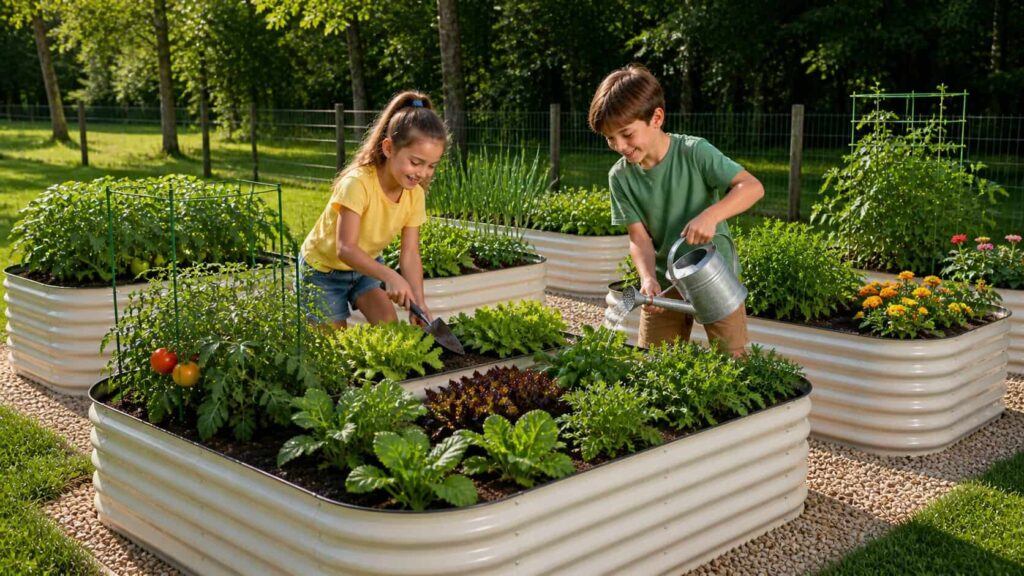
👉 Best height: 18–24 inches
- This height keeps plants within comfortable reach while encouraging kids to stay outside the bed rather than stepping into it.
- Their movements become more controlled, because they interact with their hands instead of using their whole body.
- Giving them a small section of the bed at this stage makes a real difference, since ownership naturally increases engagement.
- In everyday use, this is when kids begin checking plants, watering regularly, and noticing progress on their own.
Ages 10+: When Gardening Becomes Shared
As children move into their pre-teen years, their abilities and mindset shift again. They are more coordinated, capable of handling longer tasks, and more open to shared activities—even if they don’t always show it. Gardening becomes less about teaching and more about spending time together.
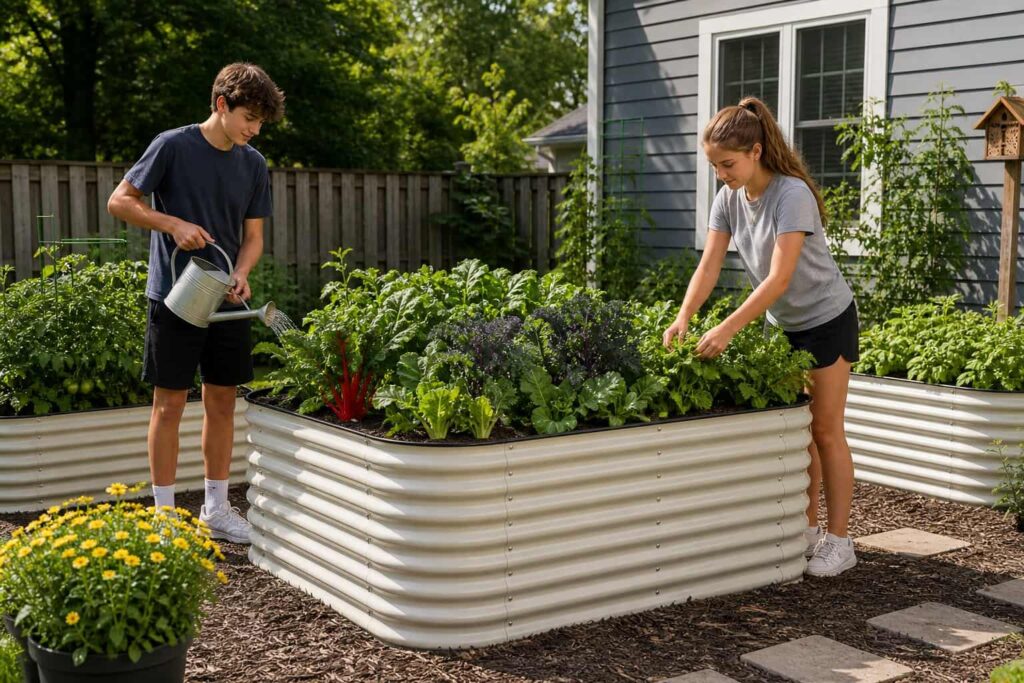
👉 Best height: 24–32 inches
- Taller beds work better here because they align with adult working height while still being accessible for older kids.
- The garden stays cleaner and more organized, with fewer accidental steps into the soil.
- The experience shifts from guiding them to simply working side by side, which feels more natural at this age.
- For me, this was the stage I enjoyed the most—because gardening became something we shared, not something I managed.
If You Only Want One Raised Bed for Kids
If you prefer a simple setup, choosing a height of 24–32 inches is the most practical long-term option. It works across multiple age groups, keeps the garden structured, and is comfortable for adults as well.
You can always adapt by adding a small step stool for younger kids or dividing the bed into sections so each child has their own space.
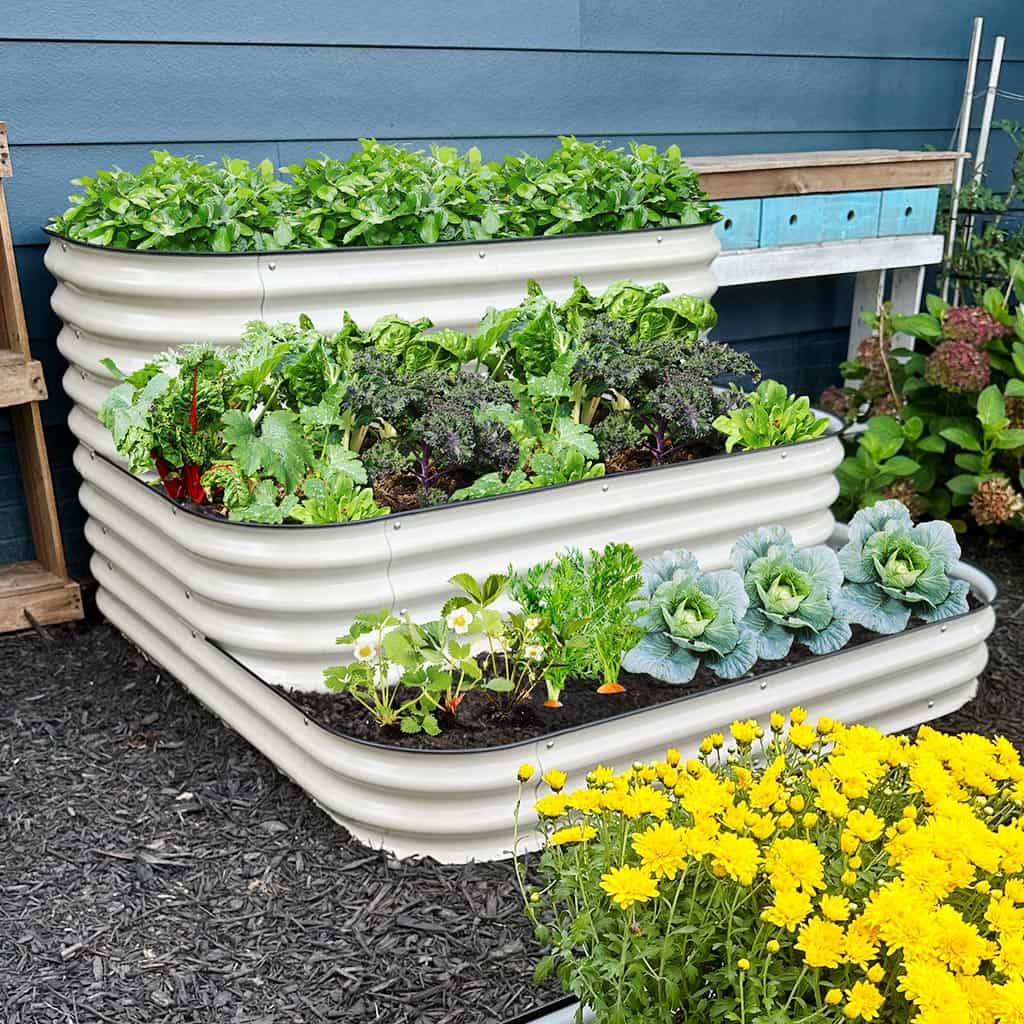
Image Source: https://www.vegega.com/
Safety Details That Matter More Than You Think
Small design choices make a big difference when kids are involved.
- Smooth, rounded edges help prevent minor bumps and scratches during everyday play.
- Using food-safe, outdoor-grade materials ensures the garden remains a safe place to grow and explore. Modern metal raised beds—like modular systems from Vegega—are often designed with durability and smooth finishes, making them a practical option for families.
- A stable structure is essential, because kids naturally lean, sit, and test boundaries. A bed that feels solid creates confidence for both you and them.
How to Make Raised Garden Beds Fun for Kids (Not Just Functional)
The goal isn’t just to build a garden—it’s to create a space kids want to return to.
- Giving them ownership, even over a small section, makes them feel responsible and involved.
- Choosing fast-growing plants like lettuce or strawberries helps maintain their interest because they can see results quickly.
- Letting them touch, smell, and explore plants turns gardening into a sensory experience rather than a task.
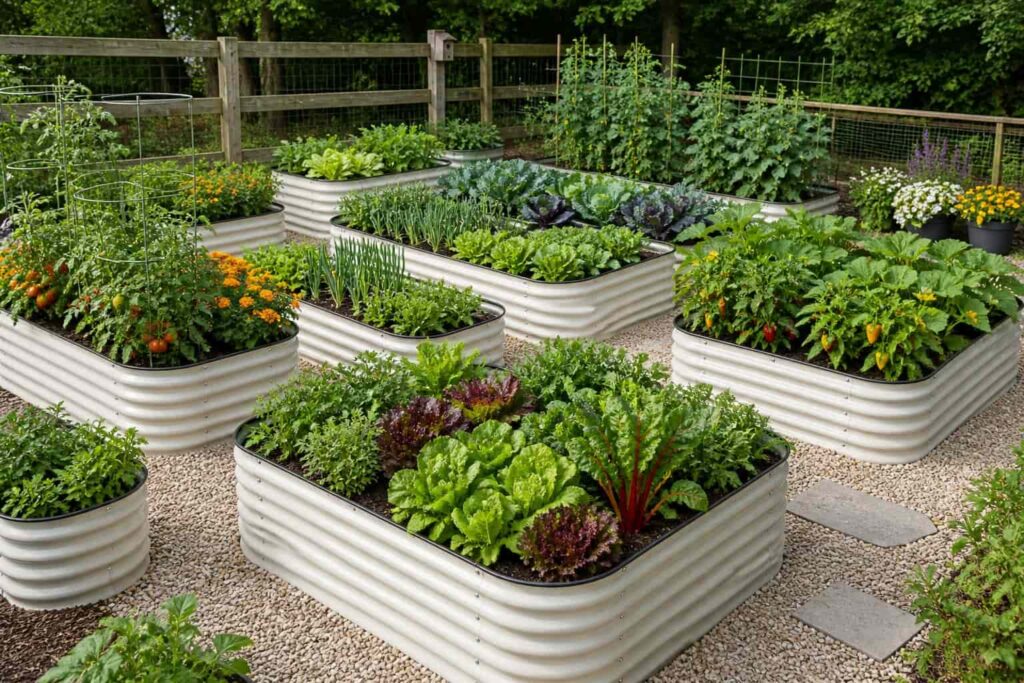
A Small Moment I Still Remember
When my kids were younger, they didn’t care much about gardening at first.
But once they had their own space in a raised bed, something shifted.
They started checking plants every morning.
Watering without being asked.
Getting excited over the smallest changes.
It wasn’t perfect.
But it became something we shared.
Final Thoughts from Tina
As a mom, I’ve learned this:
Kids don’t remember perfect gardens.
They remember how it felt to be included.
Raised garden beds—when designed the right way—don’t just grow plants.
They create structure, safety, and small moments that stay with your kids long after the garden changes.And sometimes…
that all starts with getting the height right.