
Toxic garden beds are any planting structures made from materials that leach synthetic chemicals, heavy metals, or petroleum-based preservatives into the soil, potentially contaminating the vegetables you intend to eat. While many gardeners focus on organic seeds and fertilizers, the structure holding the soil is often the primary source of long-term contamination. As a Raised Bed Expert, I’ve spent years analyzing soil test results and structural degradation to help growers identify which materials support life and which ones introduce unnecessary risks to the dinner table.
What Exactly Is a “Toxic” Garden Bed?
In the context of backyard horticulture, “toxic” refers to materials that are not “food-grade.” These materials contain compounds designed for industrial use—such as preventing rot in utility poles or keeping pests away from shipping pallets—that were never intended to come into contact with edible plants.
How Contamination Happens
When you water your garden, the moisture acts as a solvent. Over time, chemicals embedded in the bed walls migrate into the soil through a process called leaching. Once in the soil, these substances can be absorbed by the root systems of your plants. This is particularly concerning for root vegetables like carrots, potatoes, and radishes, which have direct, prolonged contact with the contaminated medium.
Potential Health and Soil Impacts
- Soil Microbiome Disruption: Many industrial preservatives are designed to kill fungi and bacteria. While this prevents rot in the wood, it also kills the beneficial soil microbes that plants need to thrive.
- Bioaccumulation: Certain heavy metals, like arsenic or chromium (found in older treated wood), do not break down. They stay in the soil and can accumulate in plant tissues over several growing seasons.
- Long-term Exposure: For a home gardener, the risk isn’t usually acute poisoning from a single salad. Instead, the concern is low-level, chronic exposure to endocrine disruptors or heavy metals over years of consuming “home-grown” food.
*This video was created using NotebookLM, based on my review content, so you can listen instead of reading.
The Main Culprits: Identifying Toxic Materials
If you are sourcing materials for a new garden, or evaluating an old one, these are the red flags you need to watch for.
1. Pressure-Treated Wood (The Old and the New)
For decades, the standard for outdoor lumber was CCA (Chromated Copper Arsenate). As the name suggests, it contained arsenic. While CCA was phased out for residential use in 2003, many older raised beds in established gardens still contain it.
Modern pressure-treated wood uses ACQ (Alkaline Copper Quaternary) or Copper Azole. While the EPA considers these safe for residential use, they still involve high concentrations of copper and fungicides. In acidic soils, copper can leach at levels that are toxic to earthworms and soil life, even if the plant itself survives.
2. Railroad Ties and Utility Poles
These are often available for free or very cheap, but they are perhaps the most dangerous choice. They are treated with Creosote, a thick, black coal-tar derivative. Creosote is a known carcinogen and will leach into the soil for decades. If you smell “gasoline” or “tar” near a garden bed on a hot day, it is likely creosote.
3. Non-Heat-Treated Pallets
Pallets are a favorite for budget-conscious DIYers. However, many are treated with Methyl Bromide (MB), a highly toxic pesticide and ozone depletor. Unless a pallet is clearly stamped with “HT” (Heat Treated), it should never be used for food production.
4. Low-Quality “Painted” Metal
Not all metal beds are created equal. Cheap, imported metal beds often use lead-based paints or inferior coatings that flake off into the soil as the metal undergoes thermal expansion and contraction.
| Material | Safety Rating | Verdict |
|---|---|---|
| Creosote Ties | Dangerous | Avoid entirely; remove from existing gardens. |
| CCA Wood (Pre-2003) | High Risk | Do not use for food; replace immediately. |
| ACQ Treated Wood | Moderate | Use only if lined with food-grade plastic; not for organic. |
| MB Pallets | High Risk | Avoid; use only for non-edible flower beds. |
| Untreated Pine | Safe | Safe but will rot within 2–3 years. |
A Personal Perspective from Tina: 20 Years in the Dirt
After two decades of building gardens across the United States, I’ve had my fair share of “oops” moments. In my early days, I used whatever wood was cheapest at the big-box store. I quickly realized that “cheap” comes with a hidden cost: the anxiety of wondering if my children were eating arsenic-laced tomatoes.
I now firmly believe that if you can’t afford safe materials, it is better to garden directly in the ground or use fabric grow bags. My Suggested Alternatives (Similar Cost, Higher Safety)
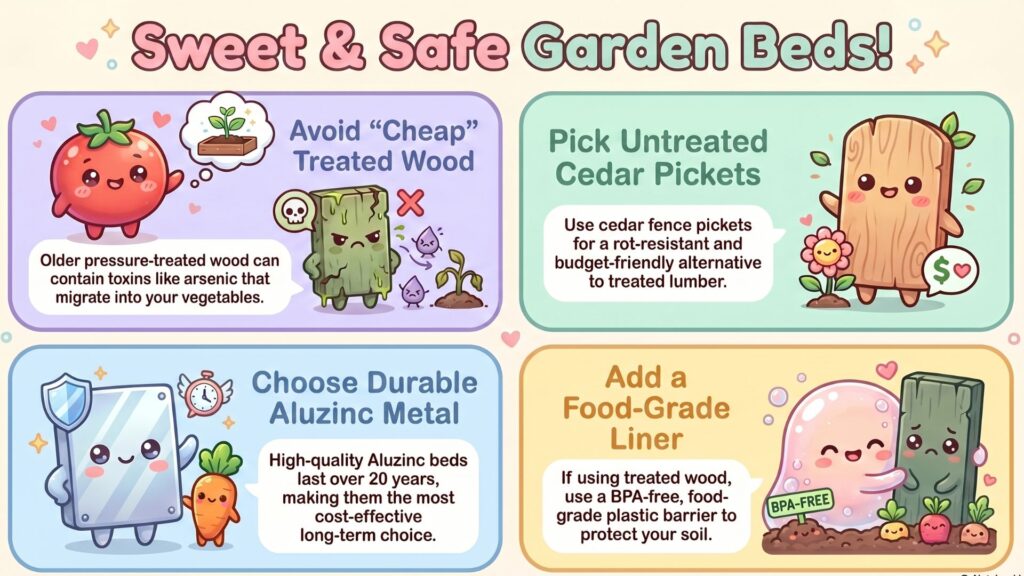
If you are looking for a middle ground between “free but toxic” and “expensive but safe,” here are my go-to recommendations:
- Untreated Cedar or Redwood: While more expensive than pressure-treated pine, it is naturally rot-resistant. If you buy “fence pickets” rather than thick 2×12 planks, the cost is surprisingly similar to treated wood.
- Corrugated Aluzinc: This is my personal favorite. A high-quality Aluzinc bed lasts 20+ years. When you calculate the cost per year, it is significantly cheaper than replacing rotted wood every five seasons.
- Untreated Juniper: Often used as fence posts, juniper is incredibly rot-resistant and usually cheaper than cedar in many parts of the country.
- Food-Grade Liners: If you already have a treated wood bed and can’t afford to replace it, line the interior with a heavy-duty, BPA-free, food-grade plastic. This creates a physical barrier that significantly reduces chemical migration.
Critical Advice for Each Gardener Group
- For Beginners: Don’t let “analysis paralysis” stop you, but avoid the “free” wood piles on the side of the road. Stick to untreated pine for your first year if budget is tight; it will rot eventually, but it won’t poison your soil.
- For Urban Gardeners: Since your space is likely small, invest in one high-quality, non-toxic metal bed. You don’t need many; you just need one that works safely.
- For Organic Purists: Avoid all pressure-treated lumber. Even the “safe” modern versions are not allowed under most organic certification standards due to the high copper content.
Conclusion: Protect Your Family, Protect Your Soil
The goal of gardening is to move away from the industrial food system and toward something wholesome. Building a garden using toxic garden beds defeats the purpose of growing your own food. By choosing naturally resistant woods or modern, stable metal alloys, you ensure that the only things ending up in your vegetables are the nutrients you put in. Your family deserves a harvest that is as healthy as it looks.