
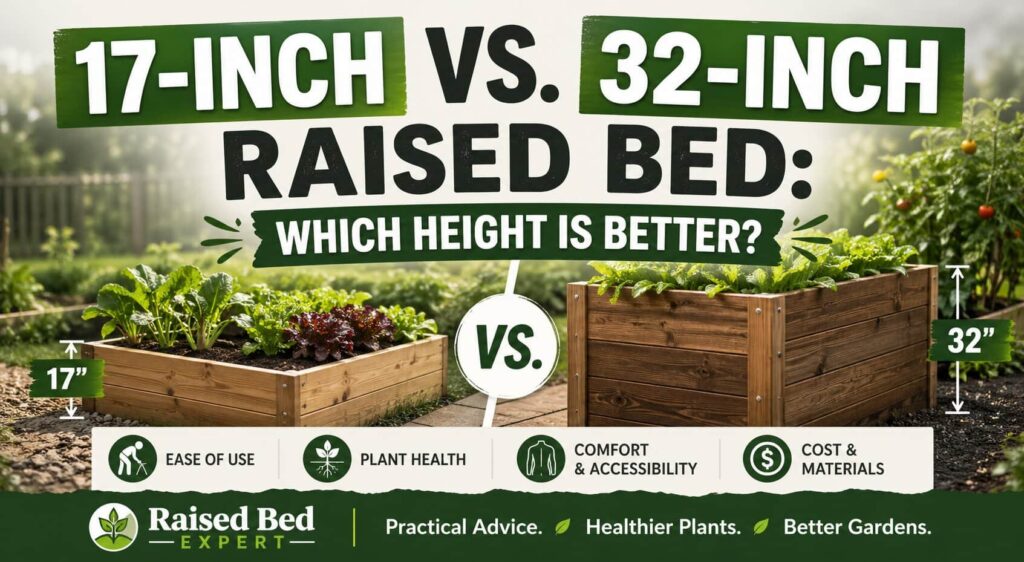
Choosing between a 17-inch vs 32-inch raised bed is a decision that balances your initial setup budget against a decade of potential back strain and plant health. While a 17-inch bed is the practical choice for budget-conscious beginners, the 32-inch height offers a premium, ergonomic experience that transforms how you interact with your backyard.
After 10 years of getting my hands dirty in the American soil—from the humid summers of the East Coast to the unpredictable shifts of the Midwest—I have learned that height is not just an aesthetic choice. It is a structural commitment. I started my journey with 6-inch wooden frames because they were cheap, only to find myself kneeling in the mud, fighting off rabbits, and replacing rotted timber three years later. If I could go back to year one, I’d tell myself that height is the foundation of your gardening longevity.
* This video was created using NotebookLM, based on my content, so you can listen instead of reading.
Affiliate Disclosure
We’ve included links to the products mentioned in this article so you can easily check them out. Some links are affiliate links, meaning we may earn a small commission if you purchase—at no extra cost to you.
The 17-Inch Raised Bed: The Pragmatic Middle Ground
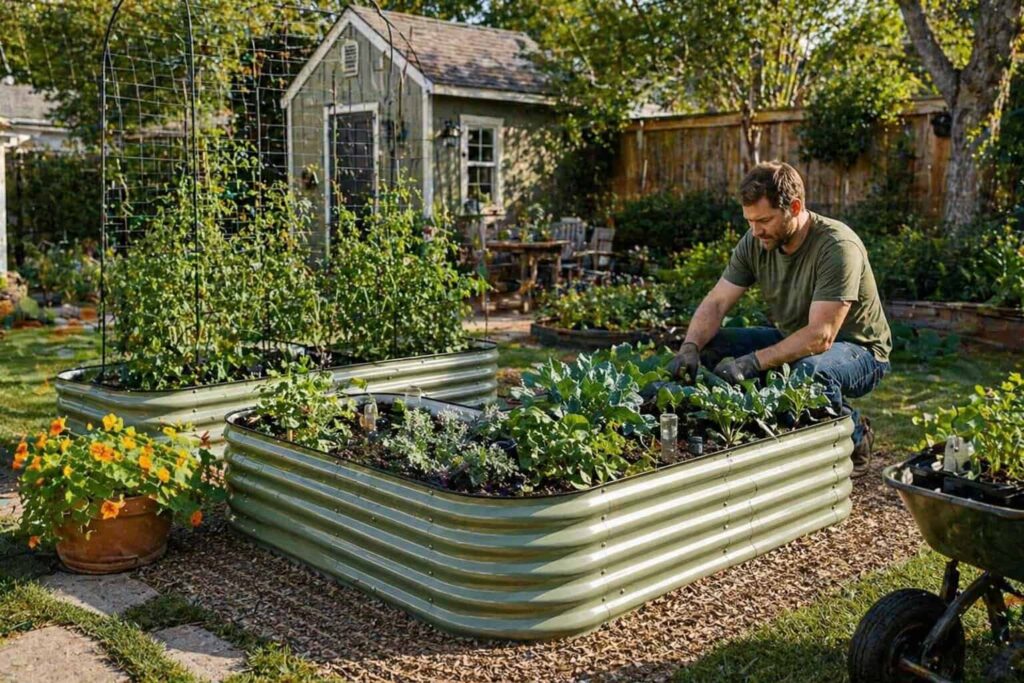
The 17-inch height has become the industry standard for most modular metal and cedar beds. It is deep enough to handle almost any crop you throw at it while remaining relatively affordable to fill.
Root Depth and Plant Performance
Most vegetables, including “heavy hitters” like kale, peppers, and even large heirloom tomatoes, primarily utilize the top 12 to 15 inches of soil. A 17-inch bed provides that critical depth plus a small buffer. This height is particularly effective for root crops like carrots and parsnips, giving them enough “runway” to grow straight and long without hitting the hard-packed clay often found beneath suburban lawns.
Soil Economy and Maintenance
The biggest advantage of a 17-inch bed is the soil volume. Filling a garden is often more expensive than buying the bed itself. With a 17-inch depth, you are using a manageable amount of high-quality organic compost and topsoil.
Raised Bed Expert tip: If you are installing multiple beds on a budget, starting at 17 inches allows you to invest more in premium soil amendments—like worm castings and biochar—rather than just buying bulk filler for a taller container.
The 32-Inch Raised Bed: The Ergonomic Dream
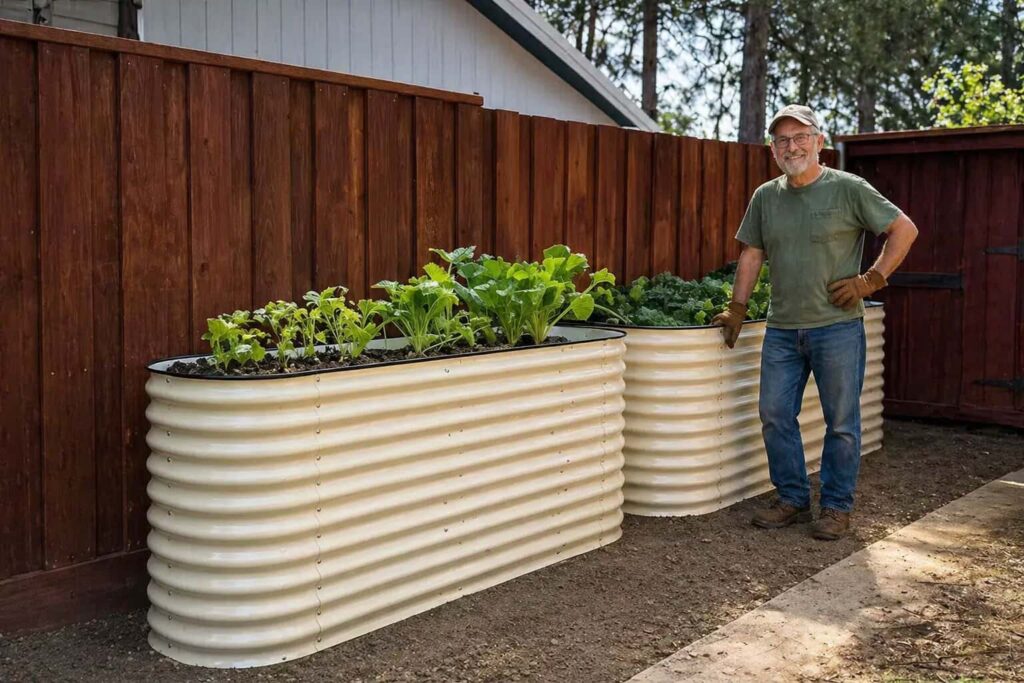
The 32-inch bed is often referred to as “waist-high” or “bar-height” gardening. For a gardener who has spent a decade bending over, this height feels like a luxury, but it serves very specific functional purposes.
Eliminating the “Gardening Tax” on Your Body
The “tax” I’m talking about is the toll on your lower back and knees. At 32 inches, you can weed, prune, and harvest while standing upright or sitting on a garden stool. This is the primary reason many experienced gardeners eventually “upgrade” to this height. It makes the daily tasks of gardening accessible even on days when your body feels every bit of those 10 years of experience.
Superior Pest and Weed Control
In many parts of the US, rabbits and groundhogs are the primary antagonists. A 17-inch bed is a hurdle for a rabbit; a 32-inch bed is a fortress. Most small critters will not even attempt to jump into a bed that high. Additionally, the height keeps your plants well above the “weed seed rain” that happens at ground level, significantly reducing the time you spend pulling unwanted grass from your garden.
Technical Comparison: 17-Inch vs 32-Inch
| Feature | 17-Inch Bed | 32-Inch Bed |
| Ergonomics | Requires kneeling or deep bending | Standing or stool height |
| Soil Volume | ~11 cubic feet (per 4×4 area) | ~21 cubic feet (per 4×4 area) |
| Filling Cost | Economical | Expensive |
| Pest Protection | Moderate (Rabbits can jump in) | High (Deters most small mammals) |
| Drainage | Good | Excellent |
| Lifespan Impact | High (Less pressure on walls) | Requires reinforced bracing |
You may also like: Metal vs. Wood Raised Beds: Which Material Truly Wins in the Long Run
Lessons from a Decade of Mistakes
If you are new to this, let me share the mistakes I made so you don’t have to.
- The Soil Sinkhole: My first 32-inch bed was a disaster because I tried to fill the whole thing with bagged potting mix. It cost a fortune and settled by 6 inches within a month. Now, I use the Hügelkultur method: fill the bottom 50% with logs, sticks, and dried leaves. It saves money and creates a long-term nutrient reservoir.
- The Material Trap: Don’t buy thin, 18-gauge metal or untreated pine for a 32-inch bed. The weight of wet soil at that height is immense. If the walls aren’t high-quality galvanized steel or 2-inch thick cedar, they will bow and eventually fail.
- Climate Considerations: In hot zones (like USDA Zones 8-10), 32-inch beds dry out faster due to increased evaporation through the side walls. If you go tall, you must commit to a thick layer of mulch and perhaps a drip irrigation system.

Detailed Evaluation: Which Height Suits You?
The 17-Inch Bed
- Pros: Cost-effective, easier for children to help, very stable, requires less “filler” material.
- Cons: You still have to bend at the waist, less protection from pets and pests.
- Who it’s for: Healthy beginners, those with large garden plots to fill, and families with young kids.
- Who it’s NOT for: Gardeners with chronic back or knee pain, or those with heavy rabbit/dog pressure.
The 32-Inch Bed
- Pros: Zero bending, architectural beauty, keeps dogs and rabbits out, superior drainage for heavy rain areas.
- Cons: High initial cost, requires massive amounts of soil/filler, can be too tall for children to see into.
- Who it’s for: Seniors, urban gardeners with small footprints, and people who want gardening to be a low-impact physical activity.
- Who it’s NOT for: People on a strict budget or those who want a “quick and easy” afternoon setup without sourcing logs for filler.
Structuring for Success: Materials and Shapes
When you decide on height, you must also look at modular flexibility. I prefer U-shaped or L-shaped configurations for 32-inch beds. This allows you to reach the center of the bed from multiple sides without ever having to step inside (which compacts the soil).
For 17-inch beds, a standard 4×8 rectangle works well, but never go wider than 4 feet. If you can’t reach the middle from the side, you defeat the purpose of a raised bed. Safety is also key; look for beds with rolled edges or rubber trim, especially if you have pets or children running around.
Closing Thoughts
Gardening is a marathon, not a sprint. In my 10 years, the most successful gardens weren’t the ones that looked “perfect” on day one, but the ones that were built to fit the gardener’s lifestyle. If you have the budget and want to save your back, go for the 32-inch depth. If you want to start your first five beds today without spending a month’s salary on soil, the 17-inch height is your best ally.
Whatever you choose, remember that the “Expert” isn’t the one with the tallest bed; it’s the one who is still out there enjoying the harvest ten years later because they built a garden that didn’t break their back or their bank account.